Regular lotion often isn't enough for diabetic skin because the problem is not only missing water: high blood sugar and reduced circulation also weaken the skin barrier that holds moisture in. Diabetic skin generally does better with products that both hydrate and support that barrier, used every day.
Dry skin might seem like a small issue, but for people with diabetes it can be the start of something more serious: cracks, wounds, infections and long healing times.
Why does diabetic skin lose moisture so easily?
High blood sugar and reduced circulation impair the skin's ability to stay hydrated and renew itself. Nerve changes can also reduce sweating. As a result, cracks, calluses and thickened skin are common, especially on the feet and lower legs.
For the full list of causes, see why diabetes causes dry, cracked skin.
What does the skin barrier do?
The skin barrier is the outermost layer of skin, made of cells held together by fats (lipids) such as ceramides. It does two jobs: keeping water in and keeping irritants and microbes out. When it weakens, water escapes faster than a quick layer of lotion can replace it, and the skin becomes rough, tight and prone to splitting.
Why isn't moisturizing alone enough?
Many everyday lotions are mostly water. They feel good for a short time, but much of that water evaporates, and some contain fragrance or drying alcohol that can irritate sensitive skin. Diabetic skin usually needs more than that:
- Barrier support, not just surface hydration. Ingredients that help the skin hold on to water and reinforce its protective layer matter more than a temporary wet feel.
- Calm, unirritated skin. Irritation and scratching break down skin, so fragrance-free, gentle formulas are a safer daily choice.
- Consistency. Barrier care works best as a daily habit, especially right after bathing, rather than only when skin already hurts.
What "moisture balance" means in practice is covered in moisture balance for diabetic skin.
What should you look for in a cream for diabetic skin?
- Cream rather than thin lotion: dermatology guidance generally favors creams or ointments for people with diabetes.
- Fragrance-free and hypoallergenic to lower the chance of irritation.
- Non-greasy and fast-absorbing so it is easy to use every day.
- No harsh acids or drying alcohols on dry, cracked areas.
For a deeper checklist, see best lotion for diabetic skin: what to actually look for, and for ingredients to avoid, the hidden risks of over-the-counter creams.
When is dry skin a reason to see a provider?
Cracks that are deep, painful, red or draining, calluses that are thickening, or any open sore on the feet should be checked by a healthcare provider or podiatrist. Moisturizers are for intact skin.
How Lavior's Diabetic Skin Barrier Cream fits in
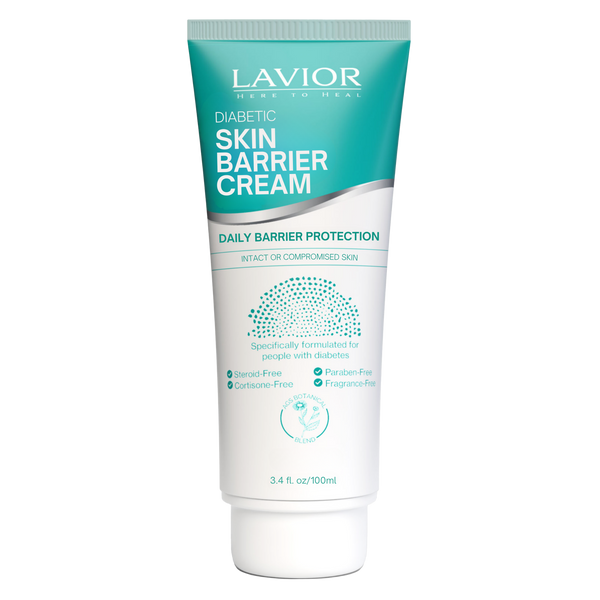
We created Diabetic Skin Barrier Cream for exactly this gap. Like every Lavior formula, it is built around Inula AGS-RIED, Lavior's proprietary extract of the Mediterranean plant Inula viscosa. Lavior™ Diabetic Skin Barrier Cream is a fragrance-free, plant-based formula designed to support the skin's natural barrier and provide long-lasting hydration of dry, intact skin, without steroids. It is intended for intact skin, not open or bleeding fissures. It is made with diabetic skin in mind, and anyone with dry, sensitive skin can use it.