With diabetes, first aid for a minor cut, scrape or burn follows the usual steps (clean, protect, cover), but you need to act promptly, check the injury every day and call your provider sooner. Reduced sensation, circulation and infection resistance mean a small injury can become a bigger problem without much warning.
Why do minor injuries need extra attention with diabetes?
Diabetes can affect several things that normally keep small wounds simple.
- Reduced sensation (neuropathy) means you may not feel a cut, blister or burn, especially on the feet.
- Reduced blood flow can slow the delivery of oxygen and nutrients the skin needs to repair itself.
- High blood sugar can make it harder for the body to fight infection and is linked to slower healing.
- Dry, fragile skin cracks and tears more easily.
For more on the biology, see how blood sugar levels affect wound healing.
How do you give first aid for a minor cut or scrape?
Clean it, keep it lightly moist and covered, and look at it every day.
- Wash your hands with soap and water.
- Stop any bleeding with gentle, steady pressure using clean gauze.
- Rinse the wound under clean running water for a few minutes. Wash around it with mild soap.
- Pat the surrounding skin dry. Avoid rubbing.
- Apply a thin layer of a suitable wound product, such as a hydrogel, to keep the wound moist.
- Cover it with a sterile, non-stick bandage. If your skin is fragile, choose a non-adhesive pad held with a gauze wrap.
- Write down the date so you can track whether it is improving.
Skip hydrogen peroxide and iodine for routine care; they can irritate healthy tissue.
How do you give first aid for a minor burn?
Cool the burn under cool, not cold, running water for about 20 minutes, then cover it loosely.
- Remove rings, watches or tight clothing near the burn before it swells.
- Cool it under cool running water. Do not use ice, butter or oils.
- Leave blisters intact. They protect the skin underneath.
- Cover loosely with a sterile, non-stick dressing. A hydrogel can keep a superficial burn moist and comfortable.
Have a blistering burn, a burn larger than the palm of your hand, or any burn on the feet checked by a provider. Neuropathy also makes it easy to scald yourself, so test bath water with a thermometer or your elbow and avoid heating pads on your feet. See how to treat a minor burn at home for more.
What about blisters?
Leave blisters unbroken where possible, cover them with a soft, non-stick dressing and remove whatever caused the rubbing. Blisters on the feet should be shown to your provider or podiatrist. Our guide to blisters and diabetes covers this in detail.
How do you check a minor injury over the following days?
Look at the wound at every dressing change, at least once a day, in good light.
- Is it smaller, flatter and less red than yesterday? That is a good sign.
- Is the redness spreading, or is it warmer, more swollen or more painful? That needs a call to your provider.
- Is there pus, cloudy fluid or a bad smell? Call your provider.
- Are your blood sugar readings higher than usual? Infection can raise blood sugar, so mention it to your care team.
If you cannot see your feet easily, use a mirror or ask someone to help.
When should you call a healthcare provider?
Call your provider for any wound on the foot, any sign of infection, a fever, or a wound that is not clearly getting better within a few days. Our guide to signs of infection in a diabetic wound lists what to watch for. Deep cuts, bites and wounds with embedded debris always need medical care.
Being prepared helps you act quickly. See what to keep in a diabetic first aid kit.
How Lavior's Diabetic Wound Hydrogel fits in
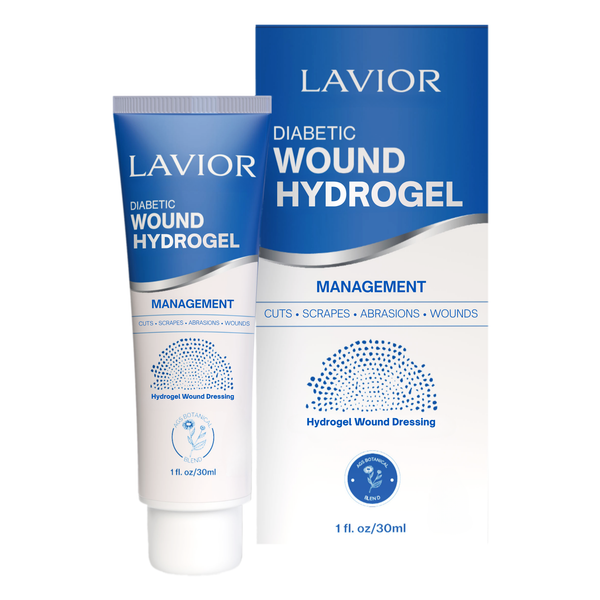
Lavior Diabetic Wound Hydrogel can be used at the "apply a thin layer" step for minor cuts, scrapes and superficial burns. Lavior™ Diabetic Wound Hydrogel helps maintain a moist wound environment when used for the indications described on its label. Follow the product instructions and your healthcare professional's wound care plan. It is non-greasy, fragrance-free and suitable for sensitive skin. Use it under a non-stick bandage as directed, and involve your healthcare provider in the care of any wound that is on the foot, infected or not improving.