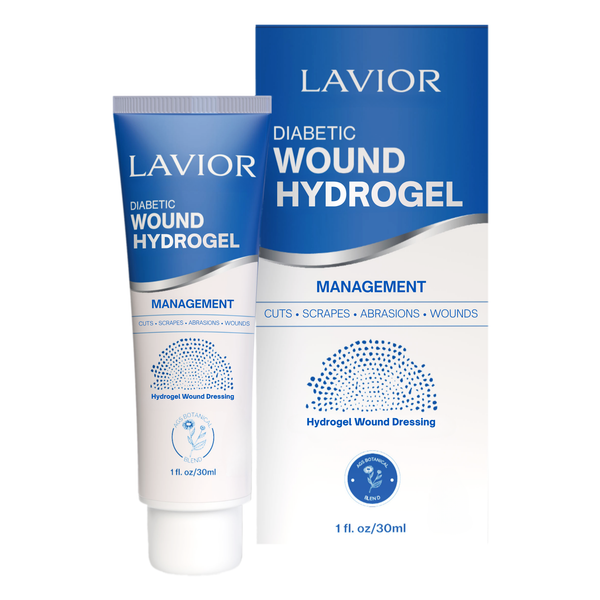
Chronic wounds don't just threaten skin. They can threaten mobility, independence, and ultimately, a limb. That's the starting point for the latest episode of LIMBWatch (Diabetic Foot Files), which brings together the team behind Lavior for a wide-ranging conversation on the science and clinical realities of chronic wound healing.
Who's on the Episode
This episode features four voices from different corners of wound care and limb preservation:
● Dr. David Warren, biomedical scientist and Chief Scientific Officer at Lavior
● Dr. Hanley, wound care and hyperbaric medicine specialist
● Dr. Sukoff, wound care podiatrist
● Ashlyn Tapley, National Sales Director at Lavior
Together, they bring the perspective of the lab, the clinic, and the field, a combination that shapes a conversation grounded as much in day-to-day patient care as in the science behind it.
What the Conversation Covers
The episode traces Lavior's origins back to Inula viscosa, a medicinal plant with centuries of traditional use, and how that research became the foundation for a bioengineered hydrogel platform. From there, the discussion moves into the clinical and scientific detail that shapes real-world wound care, including:
● The inflammatory phase of wound healing and why it can stall
● Proposed antimicrobial and anti-inflammatory activity and bioactive compounds
● Wound-bed preparation across diabetic foot ulcers, surgical wounds, burns, pressure injuries, and venous ulcers
● How Lavior's technology is being used alongside other modalities such as negative pressure wound therapy, collagen, alginate, skin substitutes, PRP, and total contact casting
Beyond the Product: The Fundamentals of Limb Preservation
One of the most valuable parts of the episode is where it goes next: past any single product and into the fundamentals that clinicians agree are non-negotiable for limb preservation, including:
1. Early intervention, before a wound becomes a crisis
2. Vascular assessment and revascularization when necessary
3. Meticulous wound-bed preparation
4. Infection and biofilm management
5. Moisture balance
6. Offloading, described in the episode as perhaps the most important factor of all
The panel also looks ahead to where wound care may be headed over the next decade, including new Lavior formulations incorporating collagen and calcium alginate, and the growing need for clinicians trained in chronic wound management and amputation prevention.
A Line Worth Sitting With
Among the episode's most memorable moments, Dr. Hanley offers a message for people living with diabetes that reframes the entire conversation:
"You can either have diabetes, or it can have you."
It's a reminder that limb preservation isn't only a clinical challenge. It's a human one, and the earlier that intervention happens, the more options patients have.
The Central Question
The episode closes on the question that drives LIMBWatch itself: how early can we intervene, and what can we do differently to preserve the limb before the wound becomes a life-changing event?
From the science of chronic inflammation to the human impact of amputation, this conversation is a reminder that saving a limb doesn't start at amputation. It starts much earlier, with early recognition, coordinated care, and a clear-eyed understanding of what a wound is actually telling us.
Listen to the Full Episode
LIMBWatch | Diabetic Foot Files
Hear the full conversation with Dr. David Warren, Dr. Hanley, Dr. Sukoff, and Ashlyn Tapley on the science, clinical challenges, and future of chronic wound care and limb preservation.
This episode and article are for educational purposes only and do not constitute medical advice or an endorsement of any specific product. Clinical decisions should be based on individual patient assessment and the available evidence.