Winter is harder on diabetic skin because cold outdoor air and dry indoor heat pull moisture from the skin while cold temperatures narrow blood vessels, and diabetes often means circulation and nerve function are already reduced. The result is more dryness, cracking and irritation, especially on the feet, and cracks that may go unnoticed.
For most people, winter dryness is uncomfortable. For people living with diabetes, it is worth taking seriously, because broken skin can turn into a wound that is slow to heal.
Why is winter especially hard on diabetic skin?
- Cold air pulls moisture from the skin. Cold, low-humidity air reduces the skin's natural oils, so it loses water faster and cracks more easily.
- Indoor heating dries skin further. Most heating systems produce dry air that draws moisture out of the skin's outer layer.
- Circulation decreases in the cold. Blood vessels constrict in low temperatures, which is a bigger challenge when diabetes has already affected circulation.
- Neuropathy can feel worse. Some people notice more numbness, tingling or temperature sensitivity in winter, and reduced sensation can hide early warning signs.
- Dry skin becomes more fragile. Even minor friction from socks or boots can cause cracks that take a long time to settle.
These factors help explain why foot problems and cracked heels often become more noticeable in the colder months.
Which winter skin changes should you never ignore?
Some symptoms are common in winter, but with diabetes they can mean the skin is becoming vulnerable. Watch for:
- Tight or itchy skin
- Rough patches that don't soften with moisturizer
- Flaking around the heels or toes
- Cracks that appear without pain
- Redness or irritation around dry areas
- Burning or stinging sensations
- Thickened skin on pressure points
- New or increased numbness in the feet
Cracks and dryness might seem small, but they can become openings for bacteria. Any crack that is deep, red, painful or draining should be checked by a provider.
What daily winter routine helps protect diabetic skin?
Small daily habits make a big difference. The goal is to keep skin hydrated, flexible, protected and checked.
- Moisturize every day. Apply a diabetic-friendly, fragrance-free cream after bathing to lock in moisture, focusing on heels, legs and hands but not between the toes. Learn what moisture balance means for diabetic skin.
- Keep showers short and warm, not hot. Hot water strips natural oils. Moisturize as soon as you finish.
- Wear protective socks and well-fitting footwear. Soft, friction-reducing socks help prevent irritation. Winter boots should fit comfortably without pinching; see footwear mistakes that lead to ulcers.
- Add humidity indoors. A humidifier helps counter dry heated air. Clean it regularly.
- Inspect your feet every day. Look for redness, cracks, flaking, blisters, swelling or anything that looks different from the day before. A mirror helps if your feet are hard to reach.
- Cover up outdoors. Gloves, warm socks and proper shoes reduce exposure to cold, drying air. Avoid warming numb feet with heating pads or hot water bottles, since reduced sensation makes burns easier.
- Act early on small problems. Don't wait for dryness to become cracking. Increase moisturizing at the first sign of rough skin, and get broken skin checked rather than waiting.
For more cold-weather steps, see how to protect diabetic skin in winter, and for heel fissures, cracked heels: why they happen.
How Lavior's Diabetic Skin Barrier Cream fits in
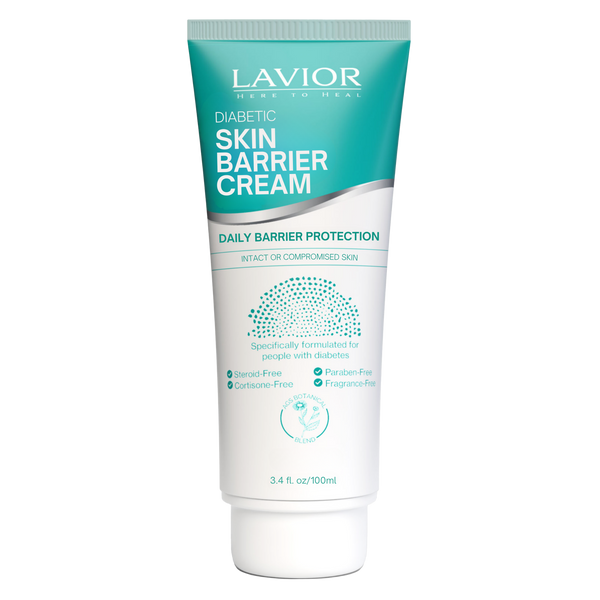
Lavior™ Diabetic Skin Barrier Cream is a fragrance-free, plant-based formula designed to support the skin's natural barrier and provide long-lasting hydration of dry, intact skin, without steroids. It is intended for intact skin, not open or bleeding fissures. Like every Lavior formula, it is built around Inula AGS-RIED, Lavior's proprietary extract of the Mediterranean plant Inula viscosa. Cracks or wounds on diabetic feet should still be checked promptly by a healthcare provider.
Sources
- Lima AL, et al. Cutaneous manifestations of diabetes mellitus: a review. Am J Clin Dermatol. 2017;18(4):541–553. doi:10.1007/s40257-017-0275-z
- Fluhr JW, et al. Restoring skin hydration and barrier function: mechanistic insights into basic emollients for xerosis cutis. Int J Dermatol. 2025;64(Suppl 1):5–12. doi:10.1111/ijd.17790
- American Diabetes Association Professional Practice Committee. 12. Retinopathy, neuropathy, and foot care: Standards of Care in Diabetes—2025. Diabetes Care. 2025;48(Suppl 1):S252–S265. doi:10.2337/dc25-S012