Home / Blog / Post-Surgical Recovery
Close-up of a healing wound with stitches on skin
Post-Surgical Recovery

Caring for Skin After Suture Removal or a Biopsy

E
Ethan Avitan
Sep 18, 2026
3 min read
Share This Article
In This Article

    After stitches come out or a biopsy site closes, mild redness, tightness and dryness are normal, and gentle cleansing, moisture support and sun protection are usually all the area needs. This is often when people have the most questions, because the skin looks different and it's not always clear what to do next. Here's a general guide to what's normal and how to support the area.

    What is normal after suture removal?

    Once sutures are removed, the skin underneath is still early in its recovery, so some pinkness and tightness along the line are expected. It's common to see:

    • Slight redness or pink coloring along the line
    • A feeling of tightness, especially with movement
    • Mild dryness as the area continues to remodel
    • Small marks where the sutures were, which typically fade over time

    What is normal after a biopsy?

    A closed biopsy site goes through a similar process: it's usually more delicate than the surrounding skin for a while and may feel dry, tight or slightly different in texture as it recovers. Small removal sites, such as mole or skin tag removals, follow much the same pattern.

    How do you care for the skin after stitches or a biopsy?

    Follow your provider's instructions, keep the site clean, moisturize gently once it's closed, protect it from the sun, and watch for changes.

    1. Follow your provider's specific instructions first. This is general education, not a substitute for your provider's directions.
    2. Keep the area clean using gentle, provider-recommended cleansing.
    3. Apply a thin layer of a barrier-supporting hydrogel to help maintain a moist, protective environment once the site is closed. Not sure if it's time? See when you can put lotion on an incision.
    4. Avoid picking or scrubbing the area, even if it looks dry or flaky.
    5. Protect from sun exposure where possible, as new skin can be more reactive.
    6. Watch for changes and contact your provider if you notice increasing redness, warmth, swelling or drainage, or if the site opens.

    For care over the following months, read how to support the appearance of a scar after surgery.

    How Lavior's Post-Surgical Skin Barrier Gel fits in

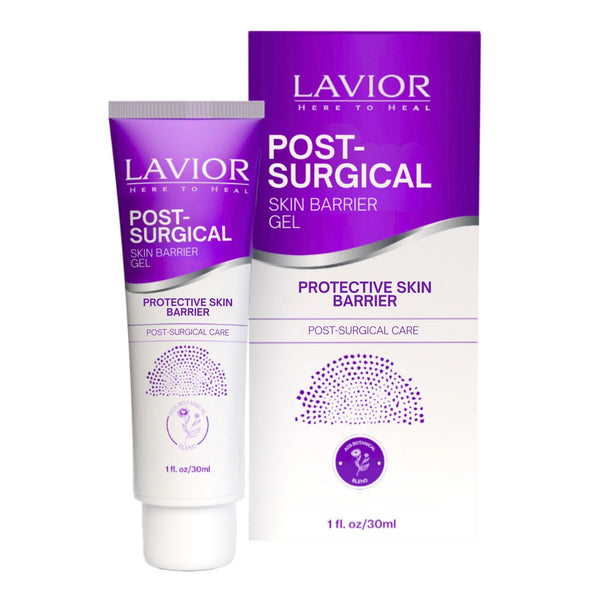
    Lavior™ Post-Surgical Skin Barrier Gel is a clean, gentle formula that helps create a moist, protected environment for recovering skin. Follow the product label and your healthcare professional's guidance on when to begin use. Like every Lavior formula, it's built around Inula AGS-RIED, Lavior's proprietary extract of the Mediterranean plant Inula viscosa. As a lightweight hydrogel, it helps maintain optimal moisture balance and forms a protective, breathable barrier, which can help with the dryness and tightness that's common during recovery.

    Sources

    1. Gold MH, et al. Updated international clinical recommendations on scar management: part 2—algorithms for scar prevention and treatment. Dermatol Surg. 2014;40(8):825–831. doi:10.1111/dsu.0000000000000050

    Frequently Asked Questions

    How soon after suture removal can I apply a skin barrier gel? +
    This depends on your provider's specific guidance for your procedure, but many people begin supportive skin care once the site is fully closed and their provider has confirmed it's appropriate.
    Why does my skin feel tight after a biopsy or suture removal? +
    Tightness is a normal part of the skin remodeling process as newly healed tissue continues to recover, and it often improves with consistent, gentle moisture support.
    Is it normal for a biopsy site to look dry or flaky? +
    Mild dryness and flaking are common during recovery; a barrier-supporting hydrogel can help improve comfort, but any concerning changes should be reviewed by your provider.
    Does caring for the skin after suture removal affect how it looks later? +
    A supportive, consistent skin care routine during recovery is generally considered helpful for comfort and the skin's appearance over time, though individual healing varies.
    This content is for general educational purposes and is not intended as medical advice. Always follow your healthcare provider's specific aftercare instructions. Post-Surgical Skin Barrier Gel is a Class I medical device intended to support the skin's moisture environment and is not intended to treat, cure, or prevent any medical condition.
    E
    Ethan Avitan
    Reviewed for medical and compliance accuracy
    Recommended For You

    Try Lavior

    Based on this article, here's where most people start.

    Featured in This Article
    Post-Surgical Skin Barrier Gel - 1oz
    Wound Care
    Post-Surgical Skin Barrier Gel - 1oz
    Advanced Botanical Post-Surgery Care Clean, gentle care for day-one recovery Most post-procedure products c...
    $49.95
    Shop Now
    Multipurpose Wound Gel - 1oz
    Wound Care
    Multipurpose Wound Gel - 1oz
    Advanced Botanical Wound Care Gel Clean ingredients for everyday skin injuries Not every skin injury calls ...
    $23.95
    Shop Now
    Diabetic Skin Barrier Cream - 3.4oz
    Diabetic Care
    Diabetic Skin Barrier Cream - 3.4oz
    Advanced daily defense for diabetic skinWhere daily protection meets diabetic skin needs Formulated with ...
    $17.95
    Shop Now
    Post-Surgical Skin Barrier Gel - 1oz

    Recommended by Lavior

    Post-Surgical Skin Barrier Gel - 1oz

    A daily barrier cream formulated for dry, fragile diabetic skin. Steroid-free, cortisone-free, fragrance-free and paraben-free.

    $49.95

    See full details

    HSA/FSA eligible · Made in the USA