Diabetic foot ulcers are costly mainly because so many become infected, and infected ulcers drive hospital admissions, surgery and amputations, which are the most expensive parts of diabetes care. Preventing a foot ulcer, or catching one early, is one of the clearest ways to reduce that burden for patients and the health system.
Foot ulcers are open sores or lesions that can lead to the necessity for a foot amputation. Among people living with diabetes, slight foot cuts and scrapes can quickly progress to a foot ulcer.
How common and how costly are diabetic foot ulcers?
According to a research article in Diabetes Care, up to 34% of all adults living with diabetes in the US develop a foot ulcer during their lives (1). Meanwhile, the persistently increasing national cost burden for diabetes medical care in the US totaled $412.9 billion in 2022, per the American Diabetes Association (2). The annual US cost of diabetic foot care per patient runs into the thousands of dollars, and this cost increases tremendously for people with diabetes who have foot ulcers (3).
Why does diabetes increase the risk of foot ulcers?
Diabetes heightens the risk of a circulatory disorder called peripheral artery disease (PAD), which is characterized by decreased blood flow in the legs and feet. Around one-third of all adults with diabetes older than age 50 are affected by PAD (4). Furthermore, people with diabetes often experience peripheral neuropathy, which can lessen sensation to pain, heat, and cold in the feet. Not only do these complications of diabetes increase the risk of a cut or scrape on the foot, but they can result in a non-healing one.
Indeed, an American Family Physician article included the following among the primary causes of non-healing cuts or scrapes progressing to ulceration (5):
- Peripheral neuropathy (nerve damage)
- Traumatic foot injury
- High plantar pressures
- PAD
How are foot ulcers linked to infection?
It is important to recognize that bacteria live on the skin, and bacterial spread into underlying tissues is more likely to occur in non-healing wounds. Thus, the risk for an infected foot ulcer is increased in people with diabetes. Furthermore, an infected foot ulcer can progress to gangrene (death of tissue below the skin), and this can make amputation necessary.
More than 50% of foot ulcers are infected by the time they are diagnosed, and recent study findings concluded that only 44.5% of diagnosed infected foot ulcers had healed by 12 months following initial diagnosis (6). Ulcers that remained open beyond 12 months were strongly associated with the need for amputation (6).
How do infected foot ulcers drive the financial burden?
Most foot amputations in people with diabetes are preceded by an infected foot ulcer, and foot ulcers are also a major reason for hospitalization in people with diabetes (7). Since hospitalization is associated with the highest financial burden on the US health system (as well as on individual patients), medical care linked to preventable diabetic foot ulcers creates a definite financial burden. As noted in an article in the Annals of Vascular Surgery, diabetes increases the incidence of foot ulcer hospital admissions 11-fold (7).
These costs do not fall evenly. Access to care and outcomes differ across communities, as Dr. Windy Cole describes in addressing racial disparities in diabetic foot care. For how infected wounds progress, see why diabetes-related amputations happen.
How do you prevent a foot ulcer?
The Centers for Disease Control and Prevention (CDC) recommends four measures for people with diabetes to help prevent a foot ulcer (8):
- Check your feet every day for cuts, redness, blisters, or sores.
- Never go barefoot.
- Wear shoes that fit well (to prevent a pressure sore from developing).
- Wash your feet every day and apply lotion to the top and bottom of each foot (not between the toes).
A fuller daily routine is outlined in a complete diabetic foot care routine. For more on the wider impact of diabetic wounds, see my related article, Diabetes and the Threat of Diabetic Wounds.
How Lavior's Diabetic Wound Hydrogel fits in
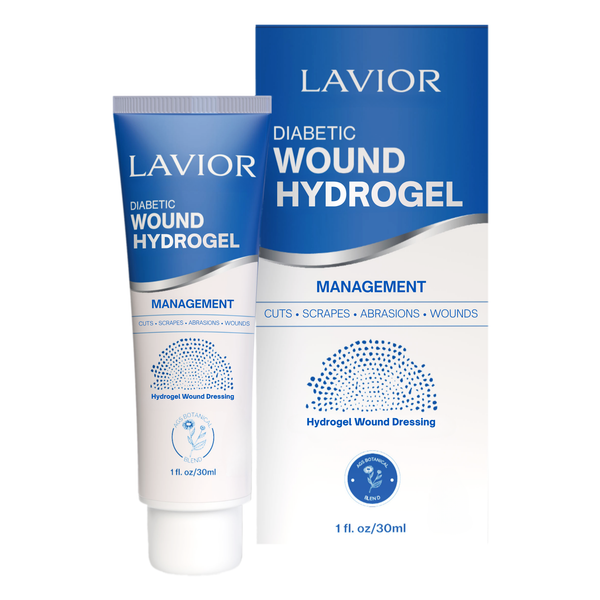
Whether you have type 1, type 2, or another form of diabetes, minor cuts and scrapes on the feet deserve prompt attention. Lavior™ Diabetic Wound Hydrogel helps maintain a moist wound environment when used for the indications described on its label. Follow the product instructions and your healthcare professional's wound care plan. Lavior also offers Diabetic Skin Barrier Cream, designed to support the skin's natural barrier on dry, intact skin. Neither product replaces evaluation by a healthcare provider, and any foot wound that is not improving should be checked.
References
- McDermott K, Fang M, Boulton AJM, et al. (2023). Etiology, Epidemiology, and Disparities in the Burden of Diabetic Foot Ulcers. Diabetes Care 46(1): 209-221.
- American Diabetes Association (ADA). (November 1, 2023). New American Diabetes Association Report Finds Annual Costs of Diabetes to be $412.9 Billion.
- Raghav A, Khan ZA, Labala RK, et al. (2018). Financial burden of diabetic foot ulcers to world: A progressive topic to discuss always. Therapeutic Advances in Endocrinology and Metabolism 9(1): 29-31. https://www.ncbi.nlm.nih.gov/pmc/articles/PMC5761954/
- UCLA Health. How to improve blood circulation if you have type 2 diabetes. uclahealth.org.
- Frykberg RG. (2002). Diabetic Foot Ulcers: Pathogenesis and Management. American Family Physician 66(9): 1655-1662.
- Ndosi M, Wright-Hughes A, Brown S, et al. (2018). Prognosis of the infected diabetic foot ulcer: A 12-month prospective observational study. Diabetic Medicine 35(1): 78-88. https://www.ncbi.nlm.nih.gov/pmc/articles/PMC5765512/
- Hicks CW, Selvarajah S, Mathioudakis N, et al. (2016). Burden of Infected Diabetic Foot Ulcers on Hospital Admissions and Costs. Annals of Vascular Surgery 33: 149-158.
- Centers for Disease Control and Prevention (CDC). Diabetes and Your Feet. cdc.gov.