Good diabetic foot hygiene means checking your feet daily, washing them in lukewarm (not hot) water, drying carefully between the toes, moisturizing dry skin, and trimming toenails straight across. These small steps keep the skin intact, which is the first line of defense against infection and ulcers.
Foot problems are a leading reason people with diabetes are admitted to hospital and a leading cause of non-traumatic lower-limb amputation.1 Hygiene is one of the easiest places to lower that risk. This guide covers the hands-on how-to; for the full routine including shoes and exams, see a complete diabetic foot care routine.
How should a person with diabetes inspect their feet?
Inspect both feet once a day, ideally at the same time, such as after a shower or before bed.
- Use good light. Sit somewhere bright or position a lamp so you can see clearly.
- Check every surface: tops, soles, heels, sides and between each toe. Spread the toes gently to look between them.
- Use a mirror for the soles, or ask a family member to help if bending is difficult or vision is limited.
- Look for blisters, cuts, redness, swelling, cracks, calluses, open sores, nail changes or anything new.
- Feel for temperature differences. A spot that is noticeably warmer or colder than the rest of the foot is worth reporting, as it can point to inflammation or circulation problems such as peripheral artery disease (PAD).
- Note what is normal for you, such as old scars or freckles, so you can spot changes.
If something is new or getting worse, contact your primary care provider or a podiatrist.
How should you wash diabetic feet?
Wash your feet every day with lukewarm water and a gentle, fragrance-free cleanser.
- Test the water first with your elbow, wrist or a bath thermometer. Neuropathy can make it hard to judge temperature with your feet, and burns are a real risk.
- Keep it brief. Avoid long soaks, which can dry out and soften the skin.
- Be gentle. Use your hands or a soft cloth rather than a stiff brush or pumice stone.
- If you have a wound that your provider is managing, follow their cleaning instructions for that area.
How should you dry your feet?
Pat your feet dry with a soft towel instead of rubbing, and dry carefully between the toes. Trapped moisture between the toes can soften the skin and encourage fungal infections. Towels with rough embroidery or hard seams can scratch fragile skin, so a soft cotton or microfiber towel is a good choice.
What is the right way to moisturize diabetic feet?
Moisturize the tops and soles of your feet daily, but not between the toes. Dry skin is common with diabetes because nerve changes can reduce sweating, and dry skin is more likely to itch and crack, especially on the heels. Cracks can become entry points for bacteria; see why cracked heels happen.
When choosing a moisturizer, look for products that are:
- Fragrance-free and hypoallergenic, to limit irritation.
- Dermatologist-tested and suitable for sensitive skin.
- Made with hydrating ingredients such as ceramides, glycerin, hyaluronic acid or urea. Humectants like glycerin and urea draw water into the outer layer of skin.
Regular moisturizing can also help soften thickened skin over time. Do not try to cut or shave calluses yourself; read when diabetic calluses become dangerous.
How should people with diabetes trim their toenails?
Trim toenails straight across, leaving a little length, and smooth sharp edges with a file.
- Use clean, good-quality clippers. Larger toenail clippers are often easier to control. Clean them with soap and water and wipe with rubbing alcohol before and after use.
- Trim after washing, when nails are softer.
- Cut straight across in small snips, leaving about 1 to 2 mm of nail. Avoid rounding the corners or cutting too short, which can lead to ingrown nails.
- File sharp edges gently with an emery board.
- Ask for help if nails are thick, curved or hard to reach, or if you have poor vision or neuropathy. A podiatrist can trim them safely.
What else supports clean, healthy feet?
Change socks daily, choose seamless, moisture-wicking socks, and let shoes air out between wears. Shoe choice matters too; see what to look for in diabetic shoes and socks. Most people with diabetes should also have a professional foot exam at least once a year.
How Lavior's Diabetic Skin Barrier Cream fits in
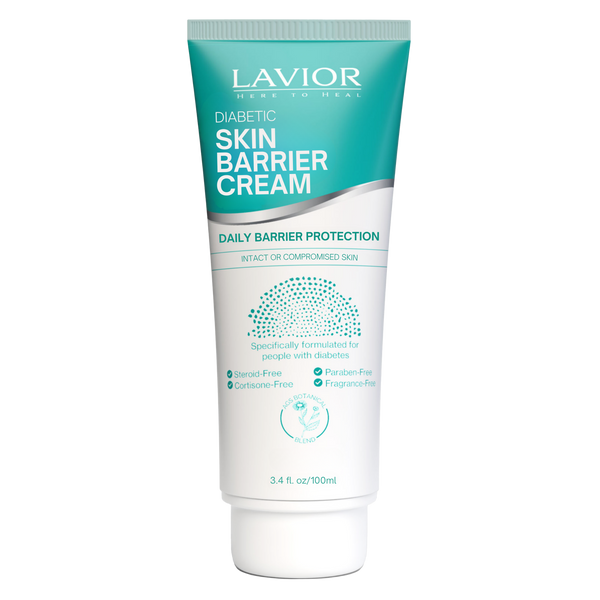
Lavior™ Diabetic Skin Barrier Cream is a fragrance-free, plant-based formula designed to support the skin's natural barrier and provide long-lasting hydration of dry, intact skin, without steroids. It is intended for intact skin, not open or bleeding fissures. Like every Lavior formula, it is built around Inula AGS-RIED, Lavior's proprietary extract of the Mediterranean plant Inula viscosa. It is fragrance-free and suitable for sensitive skin, which makes it a fit for the moisturizing step of a daily foot hygiene routine. Apply it to clean, dry, intact skin on the tops and soles of the feet, not between the toes or on open wounds.
References
- Armstrong DG, Lavery LA. Diabetic foot ulcers: prevention, diagnosis and classification. Am Fam Physician. 1998;57(6):1325-1332.