If a diabetic wound is not clearly improving within one to two weeks, or gets worse at any point, have it checked by a healthcare provider or wound care specialist. A stalled wound usually has a cause, such as pressure, infection, poor blood flow or high blood sugar, and most of those need a professional assessment to sort out.
This guide covers how to tell that a wound has stalled, why it happens and when to escalate. For the underlying biology, see why diabetic wounds heal slowly.
How do you know a diabetic wound has stopped healing?
A healing wound gets smaller, drains less and fills in with healthy pink or red tissue. A stalled wound stays the same or slowly gets worse. Watch for:
- No change in size over a week or more, even with good care.
- Edges that don't move inward, or that look thick, white or rolled.
- Ongoing or increasing drainage, or drainage that changes color or smell.
- A pale, yellow, gray or dark wound bed instead of moist pink tissue.
- A callus or blister that keeps re-forming over the same spot.
Taking a photo every few days, with a ruler or coin for scale, makes changes much easier to judge.
Why do diabetic wounds stop improving?
Most stalled diabetic wounds have one or more fixable problems keeping them in the inflammatory stage of healing. The most common are:
- Ongoing pressure. Walking on a foot wound, even briefly, can reinjure it many times a day. Neuropathy means you may not feel it.
- Infection or biofilm. Bacteria on the wound surface can keep it inflamed, sometimes without obvious redness or pain.
- Poor circulation. Peripheral artery disease (PAD) can limit the oxygen and nutrients reaching the wound.
- High blood sugar. Glucose that stays above target slows the cells that repair tissue.
- Dead tissue. Dead or hardened tissue on the wound bed can block new growth and feed bacteria.
- The wrong moisture balance. A wound that dries out, or one kept too wet, can stall.
For more on how doctors define a chronic wound, see what makes a wound chronic.
When should you see a doctor about a diabetic wound?
See a provider for any diabetic foot wound, and for any wound that isn't improving after one to two weeks. Get same-day care if you notice:
- Redness, warmth or swelling that is spreading
- Pus, a bad smell or a sudden increase in drainage
- Black, gray or dark tissue in or around the wound
- Fever, chills or feeling generally unwell
- Blood sugar that suddenly becomes hard to control
- New pain in a foot that is usually numb
Our guide to signs of infection in a diabetic wound covers these in more detail.
What will a provider check?
A provider or wound care clinic will look for the reason the wound has stalled. Common steps include measuring the wound, checking blood flow (for example with an ankle-brachial index), probing for depth, taking a culture if infection is suspected, ordering an X-ray if bone involvement is possible, and reviewing your blood sugar and A1C. From there they may recommend debridement, an offloading device, antibiotics or a change in dressing. See the treatments wound care providers use for an overview.
What can you do at home in the meantime?
- Keep weight off the wound as much as possible.
- Keep it clean and covered with a clean, non-stick dressing, changed as directed.
- Don't cut or pick at dead skin. Removing dead tissue should be done by a professional.
- Skip soaking and harsh antiseptics such as full-strength hydrogen peroxide, which can damage healthy tissue.
- Track your blood sugar and share readings with your care team.
- Bring your photos and a list of what you've been using to your appointment.
How Lavior's Diabetic Wound Hydrogel fits in
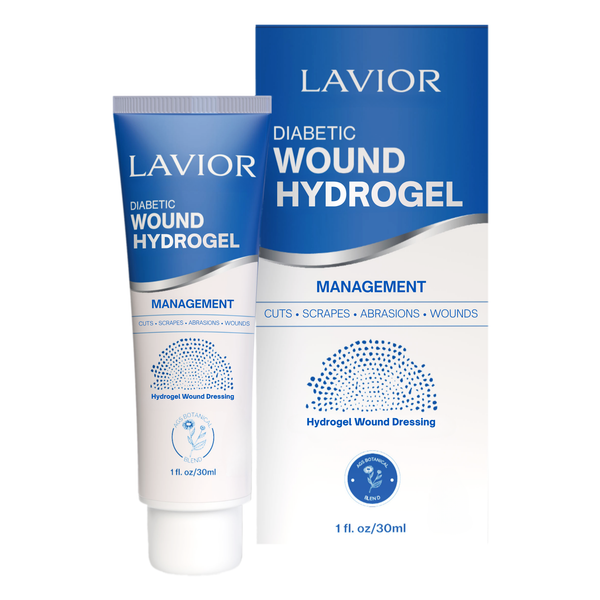
Lavior™ Diabetic Wound Hydrogel helps maintain a moist wound environment when used for the indications described on its label. Follow the product instructions and your healthcare professional's wound care plan. Like every Lavior formula, it is built around Inula AGS-RIED, Lavior's proprietary extract of the Mediterranean plant Inula viscosa. It can be part of a care routine your provider agrees to, but it is not a substitute for an assessment when a wound has stalled or shows signs of infection.