Diabetic wounds often heal slowly because, over time, high blood sugar narrows blood vessels, damages nerves and weakens immune cells, so a wound gets less oxygen, less protection and less attention than it needs. These changes can also keep a wound stuck in the early, inflammatory stage of healing instead of moving on to repair.
Below are the main biological reasons, one by one. If you already have a wound that has stopped improving, see what to do when a diabetic wound stalls.
Why do diabetic wounds heal slowly?
Healing depends on good blood flow, working nerves, an effective immune response and enough raw materials such as protein and fluids. Diabetes can interfere with all of these at once, which is why the effects add up.
Normal healing moves through overlapping stages: stopping the bleeding, inflammation, building new tissue (proliferation) and strengthening it (remodeling). With diabetes, each stage can run more slowly, and a wound is more likely to stall along the way.
How does high blood sugar affect healing?
Persistently high glucose disrupts the cells that repair tissue. It can slow the cells that lay down new tissue and collagen, and sugar that binds to proteins forms advanced glycation end products (AGEs), which make tissue stiffer and less able to repair itself.
Insulin matters beyond blood sugar, too. It is an anabolic hormone that supports tissue building, so a lack of insulin or resistance to it can slow repair in general.
How does poor circulation slow wound healing?
A wound needs a steady supply of oxygen and nutrients delivered by the blood. Diabetes raises the risk of damage to both small blood vessels and larger arteries.
- Small vessel changes reduce blood flow to the skin itself, especially in the feet.
- Peripheral artery disease (PAD) narrows the larger leg arteries with plaque. When PAD is significant, a provider may test blood flow and, in some cases, recommend procedures such as angioplasty or bypass to restore circulation.
- Smoking narrows blood vessels further, which is one reason quitting is so often recommended.
How does nerve damage affect diabetic wounds?
Diabetic neuropathy reduces feeling, most often in the feet. A blister, cut or pressure spot may go unnoticed for days, and because it doesn't hurt, people keep walking on it. The wound keeps getting reinjured and has more time to become infected.
Why are diabetic wounds more likely to get infected?
High blood sugar can impair white blood cells, the immune cells that clear bacteria. Bacteria can also form biofilm, a protective layer on the wound surface that is harder for the body to clear. Infection keeps a wound inflamed and pulls resources away from repair. Learn the warning signs in signs of infection in a diabetic wound.
Why do some diabetic wounds get stuck?
Chronic wounds often stall in the inflammatory phase. The National Institute of Arthritis and Musculoskeletal and Skin Diseases (NIAMS) explains that chronic wounds fail to progress through the normal stages of healing. Inflammation that should settle down keeps going, which raises the risk of complications such as infection.
Does nutrition affect diabetic wound healing?
Yes. Protein needs rise during healing because protein is used to build collagen, the scaffold for new tissue. Staying hydrated helps the blood carry nutrients to the wound, and vitamins and minerals such as vitamin C and zinc also play a part in tissue repair. A dietitian can help balance these needs with your blood sugar goals.
Does age make diabetic wounds heal more slowly?
Age adds to the effect. Skin gets thinner and less elastic with age, collagen production falls, and older adults are more likely to have other conditions such as vascular disease. For more on these skin-level changes, see why diabetic skin is more fragile.
What can help?
Many of these factors can be improved: keeping blood sugar in your target range, not smoking, taking pressure off foot wounds, eating enough protein and checking your feet every day. For a practical routine, see daily habits that support wound healing with diabetes. Any diabetic wound that is not clearly improving should be seen by a healthcare provider.
How Lavior's Diabetic Wound Hydrogel fits in
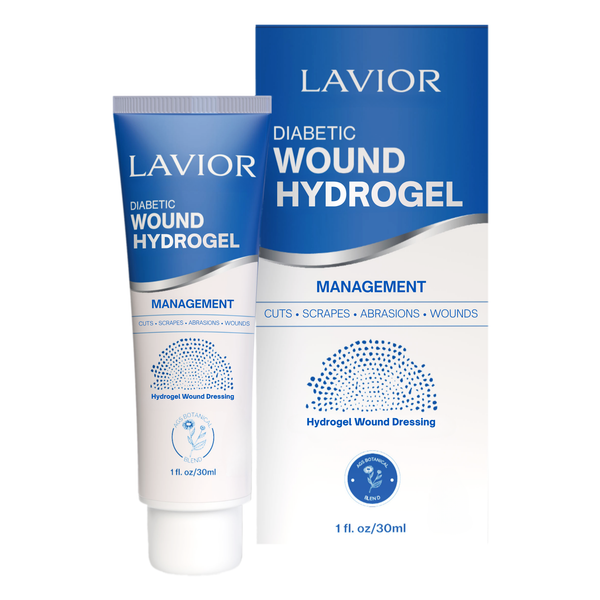
Moist wound healing is widely considered the standard approach for many wounds, because a wound that dries out tends to form a hard scab. Lavior™ Diabetic Wound Hydrogel helps maintain a moist wound environment when used for the indications described on its label. Follow the product instructions and your healthcare professional's wound care plan. Like every Lavior formula, it is built around Inula AGS-RIED, Lavior's proprietary extract of the Mediterranean plant Inula viscosa. It does not replace blood sugar management, offloading or care from your provider.