A diabetic wound care plan is a shared plan between you and your care team that sets out how the wound will be cleaned and dressed, how pressure will be kept off it, how infection will be watched for, what your blood sugar targets are and how often it will be checked. A good plan also covers circulation, nutrition and how to protect the skin once the wound has closed.
Diabetic foot wounds are a common complication of diabetes, and they are rarely solved by one product or one visit. A clear plan keeps everyone working toward the same goal.
What should a diabetic wound care plan include?
- Wound assessment. The wound's size, depth, location and cause, measured at the start so progress can be tracked.
- Goals and timeline. What healing should look like and when the plan will be reviewed.
- Cleaning and dressing routine. How to clean the wound, which dressing to use and how often to change it.
- Offloading. The shoe, boot, cast or device you'll use, and when to wear it.
- Infection monitoring. Which warning signs to watch for and who to call.
- Blood sugar targets. Your target range and how often to check while the wound heals.
- Circulation check. Blood flow testing and referral to a vascular specialist if needed.
- Nutrition and lifestyle. Protein and fluid needs, plus support for quitting smoking.
- Follow-up schedule. When you'll be seen and what will be measured.
- After healing. Footwear, skin care and foot checks to keep the wound from coming back.
Who is on a diabetic wound care team?
Depending on the wound, your team might include your primary care provider, a podiatrist, a wound care nurse or clinic, an endocrinologist, a vascular surgeon, an infectious disease specialist and a dietitian. You and your caregivers are part of the team too, since most daily care happens at home.
How do you stick to the plan at home?
- Keep a simple log of dressing changes, blood sugar readings and anything unusual.
- Take a photo every few days with a ruler or coin for scale.
- Wear your offloading device every time you stand, including short trips at home.
- Keep supplies stocked so you're never improvising.
- Ask questions at every visit if any step isn't clear.
For day-to-day technique, see how to care for a minor diabetic wound at home.
When should the plan change?
If a wound isn't clearly smaller after a few weeks of consistent care, providers commonly reassess the plan, looking again at offloading, infection, blood flow and blood sugar. Any sign of infection or worsening should prompt a call right away. See what to do when a diabetic wound stalls and the treatments wound care providers use.
Where do over-the-counter products fit in?
Topical wound care products can play a useful role in everyday care, but they work best as one part of the plan rather than the whole plan. Ask your provider which products suit your wound, and tell them about everything you're applying. Once the wound closes, the plan shifts to protecting the newly healed skin.
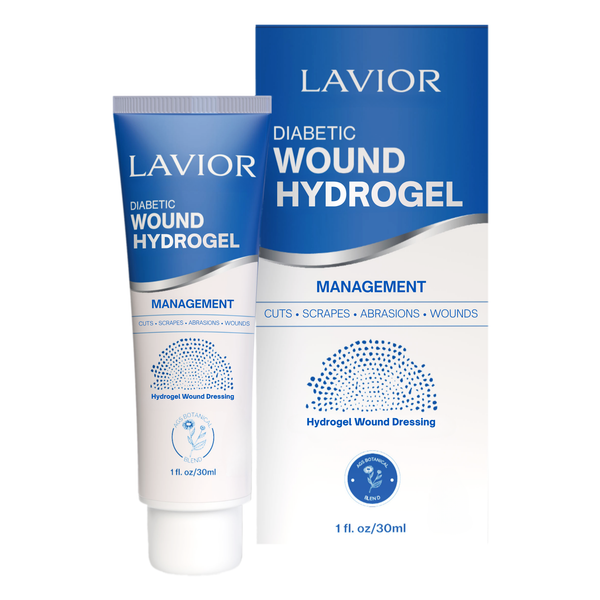
How Lavior's Diabetic Wound Hydrogel fits in
Lavior™ Diabetic Wound Hydrogel helps maintain a moist wound environment when used for the indications described on its label. Follow the product instructions and your healthcare professional's wound care plan. Like every Lavior formula, it is built around Inula AGS-RIED, Lavior's proprietary extract of the Mediterranean plant Inula viscosa.