Insulin pump site infections are one of the most common problems pump users face, and an infected site needs prompt attention from a healthcare provider, not home treatment. Good hygiene, regular infusion set changes and daily site checks are the habits that lower the risk.
For many people with diabetes, insulin pumps have become a lifeline, offering a convenient and effective way to manage blood sugar. These devices also come with a hidden risk: infection at the insertion site. Left untreated, these infections can lead to serious complications, including hospitalization.
How common are insulin pump site infections?
Site infections are among the most frequent insulin pump problems. Studies have reported that roughly 10% to 32% of pump users experience an infection at some point.
How often they occur depends on several factors, including how long someone has used a pump, how often sites are changed and individual hygiene habits. Catheter site infection is the most prevalent pump complication.
A study published in Diabetes Technology & Therapeutics linked insulin pumps to eczema, scarring and skin lesions, with skin complications observed in about one in three patients. Skin problems can impair insulin absorption and, in some cases, lead people to stop using their pump altogether. For more on that side of pump use, see our guide to scar tissue and lumps at insulin pump sites.
What does an infected insulin pump site look like?
The main warning signs are redness, swelling, warmth, pain or drainage around the insertion site. If you notice any of these, contact your healthcare provider promptly and follow your care team's instructions for moving to a new set at a different site.
- Redness or a red streak spreading out from the site
- Swelling or a firm, tender lump under the skin
- Warmth or pain that gets worse instead of better
- Pus or other drainage at the insertion point
- Fever or unexplained high blood sugar, which can accompany an infection
Why early treatment matters
Most pump site infections respond to treatment prescribed by a provider, often antibiotics, but early intervention is crucial. Left untreated, these infections can spread to deeper tissues and lead to abscesses, cellulitis or osteomyelitis.
Lauren Bongiorno has shared her story of two pump site infections that sent her to the emergency room and led to two three-day hospital stays within two and a half years. She emphasizes the importance of careful site care and the emotional toll these infections can take.
Do not put creams, gels or other wound products on an infected site in place of seeing a provider. An infection needs a professional assessment.
How can I prevent insulin pump site infections?
Clean hands, clean skin, regular set changes and daily site checks are the core habits. Fortunately, they are simple to build into your routine:
- Wash your hands. Use soap and water before and after inserting or changing your infusion set.
- Prepare the skin. Clean the insertion site with alcohol or the prep your care team recommends, and let it dry fully before insertion. The site should be clean and dry, with no lotion or cream on it.
- Change your infusion set on schedule. Most infusion sets are changed every 2 to 3 days. Follow the schedule your provider and your set's manufacturer recommend, and don't leave a set in longer than directed, since bacteria can build up over time.
- Rotate your sites. Move each new set to a different area so skin has time to recover. Our article on insulin pod changes and skin irritation covers rotation in more detail.
- Monitor your sites daily. Look for redness, swelling, pain or drainage, and check old sites as well as the current one.
- Report concerns promptly. Don't hesitate to contact your healthcare provider if you suspect an infection.
Many of the same habits apply to continuous glucose monitors. See caring for CGM sensor sites for device-specific tips. HealthLink BC also offers practical tips for living with an insulin pump.
How Lavior's Diabetic Skin Barrier Cream fits in
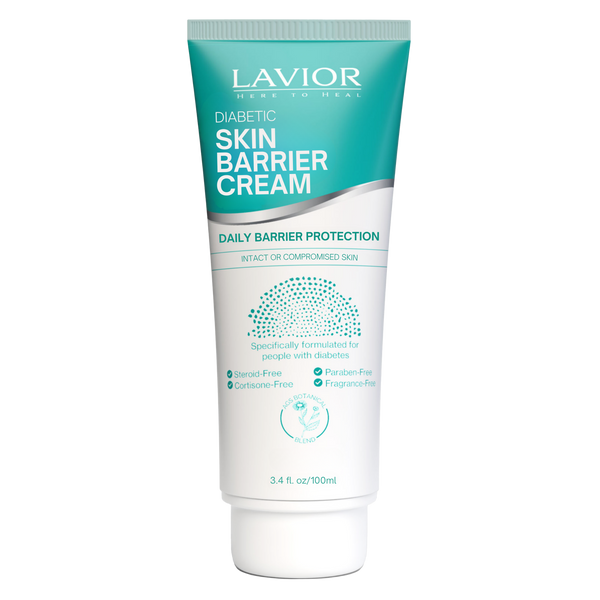
Healthy, intact skin is the first line of defense around infusion sites. Lavior™ Diabetic Skin Barrier Cream is a fragrance-free, plant-based formula designed to support the skin's natural barrier and provide long-lasting hydration of dry, intact skin, without steroids. It is intended for intact skin, not open or bleeding fissures. Use it on dry, intact skin between sites, not on the spot where your next set will go in and never on a site that looks infected. Any sign of infection should be evaluated by your healthcare provider.
Sources
- Berg, A. K., Nørgaard, K., Thyssen, J. P., Zachariae, C., Hommel, E., Rytter, K., & Svensson, J. (2018). Skin problems associated with insulin pumps and sensors in adults with type 1 diabetes: a cross-sectional study. Diabetes Technology & Therapeutics, 20(7), 475-482.
- Demir, G., Er, E., Atik Altınok, Y., Özen, S., Darcan, Ş., & Gökşen, D. (2022). Local complications of insulin administration sites and effect on diabetes management. Journal of Clinical Nursing, 31(17-18), 2530-2538.
- McAdams, B. H., & Rizvi, A. A. (2016). An overview of insulin pumps and glucose sensors for the generalist. Journal of Clinical Medicine, 5(1), 5.
- Nowakowska, M., Jarosz-Chobot, P., & Polańska, J. (2007). Bacterial strains colonizing subcutaneous catheters of personal insulin pumps. Polish Journal of Microbiology, 56(4), 239.