CGM skin irritation usually comes from repeated insertions, strong adhesives, and sweat and friction under the sensor, and the best care is to rotate sites, insert each sensor on clean, dry skin, and look after the skin between wears. Mild redness after removal is common, but reactions that linger or keep coming back are worth raising with your provider.
Continuous glucose monitors (CGMs) have changed the way people manage diabetes, with real-time readings, fewer finger sticks and better day-to-day decisions. For many users, though, they come with a frustrating side effect: irritated skin at the sensor site.
Why does my skin get irritated from my CGM?
Several factors combine at a CGM site: a small puncture, an adhesive patch that stays on for days, and the sweat and movement of daily life. Because sensors are replaced every week or two, the skin often does not get much time to recover.
- Repeated small punctures. Each insertion creates a tiny wound. Using the same areas again and again puts ongoing stress on the skin barrier.
- Adhesive irritation. Strong adhesives are needed to keep sensors in place, but prolonged contact can cause redness, itching and irritation, especially on sensitive skin. Some people develop a true allergy to an adhesive ingredient.
- Moisture and friction. Sweat, movement and clothing rubbing against the sensor can make irritation worse.
- Slower skin repair. People with diabetes often recover more slowly from minor skin injuries, so small reactions can last longer and be more noticeable. Our article on why diabetic skin takes longer to heal explains why.
- Overused areas. Inserting in the same spots repeatedly can lead to thickened, tougher skin that makes future insertions less comfortable.
What are common skin reactions at CGM sites?
The most common reactions are redness, itching and dryness around the sensor, but some people notice more lasting changes. Many CGM users report:
- Redness that does not fade soon after sensor removal
- Itching or burning under or around the adhesive
- Dry or flaky skin
- Small areas of broken skin
- Tenderness at the insertion site
- Dark marks or thickened skin over time
- Skin that feels thin or fragile
Mild redness after removal is common and usually fades within a day or so. Redness that lingers, an itchy rash in the exact shape of the adhesive, or broken skin that keeps coming back can point to adhesive sensitivity and is worth discussing with your provider. Swelling, warmth, pain or drainage at a site should be checked promptly.
How can I prevent skin damage from CGM sensors?
Good site preparation, regular rotation and gentle removal prevent most problems. Always follow your CGM manufacturer's instructions first; these habits generally help:
- Rotate insertion sites. Move each new sensor to a different spot within the areas your device is approved for, so no patch of skin is overused.
- Prepare the site properly. Wash and dry the area, clean it with an alcohol wipe if your manufacturer recommends it, and let it dry completely. Do not apply cream, lotion or gel where the sensor will go in. The site should be clean and dry so the adhesive can stick and the sensor works as intended.
- Avoid problem skin. Skip areas that are irritated, broken, scarred or lumpy, and spots where clothing or waistbands will rub.
- Remove sensors gently. Peel slowly, low and close to the skin, or use an adhesive remover. Wash off residue with mild soap and water.
- Care for skin between wears. Moisturize the old site and the surrounding skin once the sensor is off, so the area is in good condition before you use it again.
Ask your care team or manufacturer about barrier films or overpatches designed for your device if adhesive irritation is a recurring problem. Pump users can find related tips in our articles on protecting your skin during insulin pod changes and lumps and scar tissue at insulin pump sites.
How should I care for skin after removing a CGM?
Clean the area gently, let it breathe, and moisturize once it is dry and intact. Small breaks in the skin should be kept clean and covered until they close.
- Clean with mild soap and lukewarm water, then pat dry.
- Moisturize intact skin with a gentle, fragrance-free product, including the skin around the old site.
- Protect any small break in the skin with a clean bandage, and keep that area out of your rotation until it has recovered.
- Watch for signs of infection, such as increasing redness, warmth, swelling, pain or drainage, and contact your provider if they appear.
How Lavior's Diabetic Skin Barrier Cream fits in
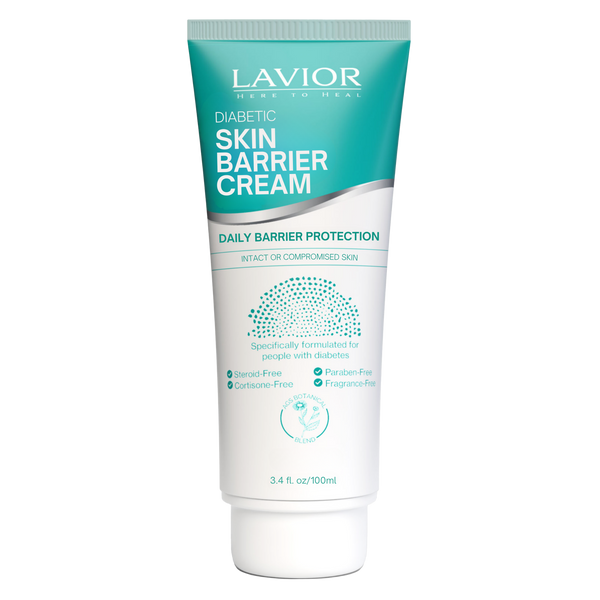
Lavior™ Diabetic Skin Barrier Cream is a fragrance-free, plant-based formula designed to support the skin's natural barrier and provide long-lasting hydration of dry, intact skin, without steroids. It is intended for intact skin, not open or bleeding fissures. Like every Lavior formula, it is built around Inula AGS-RIED, Lavior's proprietary extract of the Mediterranean plant Inula viscosa. It is designed for daily care of dry or stressed skin, such as old sensor sites once the sensor has been removed and the skin around the areas you rotate through. Never apply it where a sensor will be inserted; that site should be clean and dry. Persistent reactions, broken skin or signs of infection should be checked by your healthcare provider.
Sources
- Berg AK, et al. Skin problems associated with insulin pumps and sensors in adults with type 1 diabetes: a cross-sectional study. Diabetes Technol Ther. 2018;20(7):475–482. doi:10.1089/dia.2018.0088
- Frid AH, et al. New insulin delivery recommendations. Mayo Clin Proc. 2016;91(9):1231–1255. doi:10.1016/j.mayocp.2016.06.010