A wound that won't heal usually needs gentle cleaning, a moist (not dry) wound environment, a protective dressing, relief from pressure, and a provider's evaluation if it hasn't improved in about two weeks. A cut or sore that lasts that long without progress is considered slow-healing, and it often needs more than a standard bandage. Here's what tends to slow healing down and what supportive care generally looks like.
Why won't some wounds heal on schedule?
Wounds usually stall because something is getting in the way: the wound has dried out, blood flow is reduced, bacteria levels are high, pressure keeps reopening it, or an underlying health condition is slowing repair.
- Dry wound environment. Wounds that dry out or scab heavily often heal more slowly than those kept appropriately moist.
- Poor circulation. Reduced blood flow, which is common in older adults and people with diabetes or vascular conditions, can slow healing.
- Bioburden. A high level of bacteria at the wound surface can stall progress toward closure.
- Pressure or friction. Wounds under repeated pressure, like on the heels or lower back, have a harder time closing. See how to care for a bed sore at home.
- Underlying health conditions. Diabetes, poor nutrition and certain medications can all affect healing speed.
To learn how to spot a wound that's becoming chronic, read what makes a wound "chronic".
What should you put on a slow-healing wound?
In general, a slow-healing wound benefits from a gentle cleanser, a product that keeps the wound bed moist, such as a hydrogel, and a clean covering, all within a plan from your provider.
- Clean the wound gently with an appropriate wound cleanser, avoiding harsh scrubbing.
- Maintain a moist wound environment. Moist wound healing is widely considered more favorable than letting a wound dry out and scab. The science behind moist wound healing explains why.
- Apply an appropriate hydrogel or dressing designed to help maintain moisture balance and a clean wound surface.
- Cover appropriately with a sterile dressing.
- Monitor for changes. Increasing redness, warmth, swelling, odor or drainage are signs to contact a healthcare provider.
When should you see a provider about a wound that won't heal?
See a provider if a wound hasn't improved within about two weeks, or sooner if you have diabetes, poor circulation or other risk factors, or notice signs of infection. Leg wounds near the ankle may be venous ulcers, which need compression and professional oversight.
How Lavior's Multipurpose Wound Gel fits in
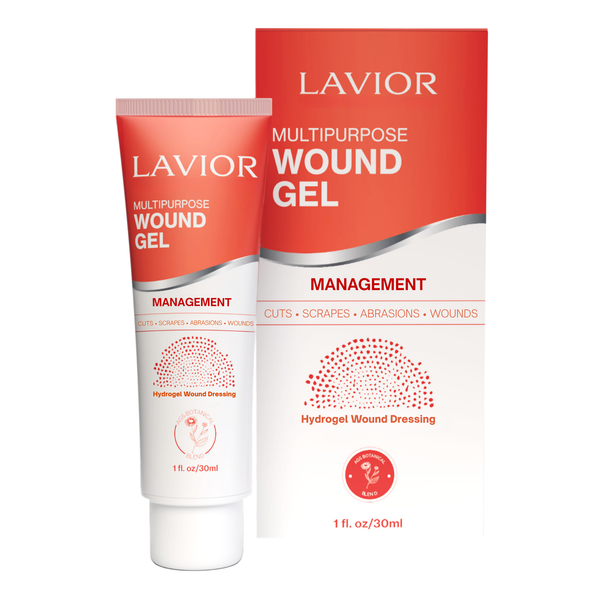
Lavior™ Multipurpose Wound Gel helps maintain a moist wound environment when used for the indications described on its label. Follow the product instructions and your healthcare professional's wound care plan. Like every Lavior formula, it's built around Inula AGS-RIED, Lavior's proprietary extract of the Mediterranean plant Inula viscosa. It's suitable for a wide range of wound types, including cuts, scrapes, pressure ulcers, venous ulcers, and chronic and acute wounds.
Sources
- Winter GD. Formation of the scab and the rate of epithelization of superficial wounds in the skin of the young domestic pig. Nature. 1962;193:293–294. doi:10.1038/193293a0