To protect your skin during insulin pod changes, rotate sites with every new pod, place each pod on clean, dry, healthy skin, and remove the old pod gently. Most skin problems at pod sites come from adhesive and repeated use of the same areas, so small habits make a real difference.
If you rely on a tubeless insulin pod, changing it every few days is routine, but it is not without challenges. Here is why pod sites get irritated and what you can do about it.
Why does my skin get irritated after insulin pod changes?
Repeated adhesive application and removal, adhesive residue left on the skin, and overuse of the same sites are the usual causes. Over time these can lead to redness, itching and, sometimes, small breaks in the skin.
Insulin pumps, including tubeless pods, have transformed diabetes management with precise insulin delivery and flexibility. But because pods are typically replaced every 2 to 3 days, the skin underneath is exposed to adhesive almost constantly. Irritated or broken skin is uncomfortable, can affect how well the next pod sticks, and can open the door to infection.
How often should I rotate insulin pod sites?
Move to a new site with every pod change, so no single area is overused. Rotation supports consistent insulin absorption and gives each patch of skin time to recover.
- Use a pattern. Many people rotate clockwise around the abdomen, or alternate between the abdomen, arms, thighs and lower back, depending on what their pod is approved for.
- Leave space. Place the new pod at least a few centimeters away from the last site, or as your care team advises.
- Track your sites. A simple note or app helps you avoid drifting back to favorite spots.
Overused sites can also develop firm or lumpy tissue that affects absorption. Our guide to lumps and scar tissue at insulin pump sites explains why site rotation matters so much.
Where should you not place an insulin pod?
Avoid any skin that is irritated, swollen, broken or scarred, and any spot where the pod is likely to rub or come loose.
- Irritated or swollen skin, open wounds, scabs or cuts
- Skin folds and strongly curved areas, where the pod cannot sit flat
- Areas directly under waistbands, belts or bra lines
- Scarred, lumpy or hardened tissue from previous sites
- Areas close to a recent site that has not fully recovered
How do I attach an insulin pod correctly?
Start with clean, dry skin and make sure the adhesive lies flat and fully sealed. Always follow your pod manufacturer's instructions first; these steps generally help:
- Prepare the skin. Wash your hands, clean the site with an alcohol wipe or the prep your care team recommends, and let it dry completely. Do not apply lotion, cream or gel where the pod will go, since it can keep the adhesive from sticking.
- Position the pod flat. Place it carefully so the adhesive pad does not crease.
- Seal the edges. Run your finger around the adhesive two or three times to make sure it is firmly attached.
- Press after insertion. After the cannula inserts, hold the pod firmly with your palm for 10 to 20 seconds to secure the adhesive.
How should I care for skin after removing a pod?
Remove the old pod slowly and gently, then clean away any adhesive residue and let the skin rest.
- Peel slowly, low and close to the skin, or use an adhesive remover your care team recommends.
- Clean off residue with mild soap and water.
- Moisturize the old site once it is clean and intact, to support the skin while it recovers.
- Check the site over the next day or two. Persistent redness, swelling, warmth, drainage or broken skin should be checked by your healthcare provider.
If you also wear a continuous glucose monitor, many of the same habits apply. See our tips for caring for CGM sensor sites.
How Lavior's Diabetic Skin Barrier Cream fits in
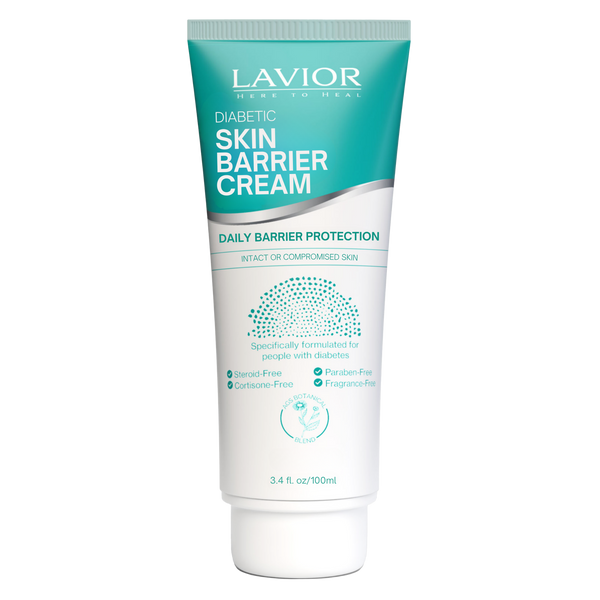
Lavior™ Diabetic Skin Barrier Cream is a fragrance-free, plant-based formula designed to support the skin's natural barrier and provide long-lasting hydration of dry, intact skin, without steroids. It is intended for intact skin, not open or bleeding fissures. Like every Lavior formula, it is built around Inula AGS-RIED, Lavior's proprietary extract of the Mediterranean plant Inula viscosa. It is designed for daily care of dry or stressed skin, such as old pod sites that have been cleaned and are intact, and the surrounding areas you rotate through. Do not apply it where your next pod will be placed; the site should be clean and dry before insertion. Any broken skin or sign of infection should be seen by your healthcare provider.
Sources
- Frid AH, et al. New insulin delivery recommendations. Mayo Clin Proc. 2016;91(9):1231–1255. doi:10.1016/j.mayocp.2016.06.010
- Berg AK, et al. Skin problems associated with insulin pumps and sensors in adults with type 1 diabetes: a cross-sectional study. Diabetes Technol Ther. 2018;20(7):475–482. doi:10.1089/dia.2018.0088