In people with diabetes, a minor cut, burn or scrape can become a slow-healing or infected wound, so even small injuries need prompt cleaning, covering and daily checks. Reduced sensation, poorer blood flow and a weaker immune response all raise the stakes.
Most healthy adults barely notice a small scrape, and it heals on its own. Here is why diabetes changes that, and what to do when a minor injury happens.
Why are minor wounds riskier with diabetes?
Diabetes affects several systems the body relies on to repair skin, so small wounds heal more slowly and are more likely to become infected. Research points to three main reasons [1, 2]:
- Reduced blood flow: damaged blood vessels deliver less oxygen and fewer immune cells to the skin, especially in the feet and legs.
- A weaker immune response: high blood sugar can impair the white blood cells that fight bacteria.
- Metabolic changes: the processes that build new tissue work less efficiently.
If infection takes hold, it can spread into deeper tissue. In severe cases this can lead to gangrene and amputation. Diabetes is the leading cause of non-traumatic lower-limb amputations in the US, and many of these begin with a minor wound. For how that progression happens, see When a Small Cut Turns Into a Bigger Problem.
Why might you not notice a cut or burn?
Diabetic neuropathy, or nerve damage, can reduce feeling in the feet and hands, so injuries can go unnoticed for days. Many people with neuropathy do not realize how much sensation they have lost.
That is why people with diabetes are advised to check their feet every day and to have a foot exam at least once a year. Because mild neuropathy causes few symptoms, it is easy to ignore until a wound is already serious.
How should you care for a minor cut, burn or scrape?
Act the same day. For a small, shallow injury:
- Wash your hands before touching the wound.
- Stop any bleeding with gentle, firm pressure using clean gauze.
- Cool a burn under cool (not cold) running water for 10 to 20 minutes. Do not use ice. See How to Treat a Minor Burn at Home.
- Clean the wound with clean running water or saline and remove visible dirt.
- Keep it moist and covered with a suitable wound gel and a clean dressing.
- Check it daily and change the dressing as directed or if it gets wet or dirty.
It helps to have supplies ready before you need them. Burns, Bruises, and Scrapes: What to Keep in Your First-Aid Kit has a checklist.
When should you call a healthcare provider?
With diabetes, it is better to call early. Contact your provider promptly if:
- The wound is on your foot, or is deep, large or dirty
- A burn blisters or covers more than a small area
- You see spreading redness, warmth, swelling, pus or a bad smell
- You develop a fever or feel unwell
- The wound is not clearly improving within a few days
Learn the full list of signs of infection in a diabetic wound.
How Lavior's Diabetic Wound Hydrogel fits in
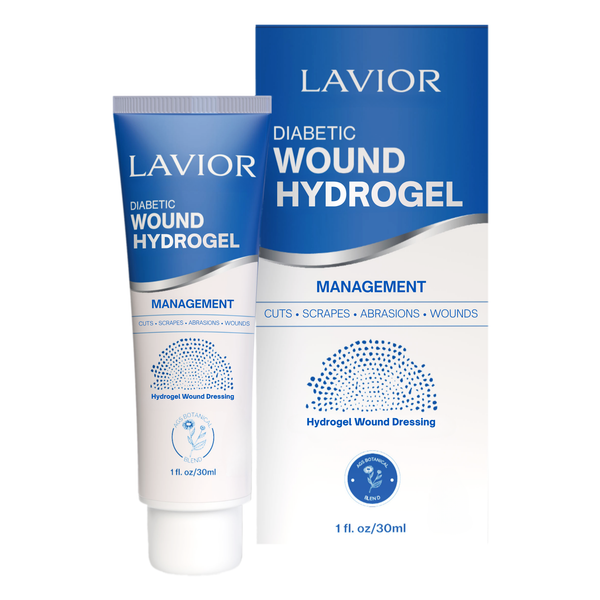
Lavior™ Diabetic Wound Hydrogel helps maintain a moist wound environment when used for the indications described on its label. Follow the product instructions and your healthcare professional's wound care plan. Like every Lavior formula, it is built around Inula AGS-RIED, Lavior's proprietary extract of the Mediterranean plant Inula viscosa. Use it after cleaning the wound, and keep your provider involved in the care of any wound that is not improving.
References
- Hirsch T, Spielmann M, Zuhaili B, et al. Enhanced susceptibility to infections in a diabetic wound healing model. BMC Surg. 2008;8(1):5. doi:10.1186/1471-2482-8-5
- Poor immune response impairs diabetic wound healing. National Institutes of Health (NIH). Published September 28, 2020. https://www.nih.gov/news-events/nih-research-matters/poor-immune-response-impairs-diabetic-wound-healing