Early sensory loss in the feet often goes unnoticed because diabetic neuropathy develops slowly, affects both feet at once, and is easy to mistake for tiredness or aging. Common first signs include tingling, intermittent numbness, burning, a "walking on socks" feeling, and small injuries you don't remember getting.
Loss of protective sensation, a form of peripheral neuropathy, is one of the main reasons small foot injuries in people with diabetes turn into slow-healing wounds. Catching it early gives you time to adjust how you protect your feet. For how neuropathy fits with the other causes of ulcers, see why diabetes causes foot ulcers.
What causes sensory loss in the feet with diabetes?
Sensory loss happens when the nerves that carry touch, temperature and pain signals from the feet are damaged. With diabetes, the main contributors are:
- Blood glucose that stays high over time, which can damage nerve fibers.
- Reduced blood flow to the nerves, since nerves depend on tiny blood vessels for oxygen and nutrients.
- Other risk factors such as how long you have had diabetes, high blood pressure, high blood lipids, smoking and heavy alcohol use.
The longest nerves are usually affected first, which is why symptoms tend to begin in the toes and feet.
Why does early sensory loss go unnoticed?
Early neuropathy is easy to miss because the changes are subtle and gradual rather than sudden.
- It progresses slowly. Small day-to-day changes in feeling are hard to notice.
- The brain adapts. As signals weaken, the brain fills in gaps, so the feet can still feel "normal."
- Symptoms get blamed on other things. Tingling or mild numbness is often put down to long days on your feet, tight shoes or getting older.
- Temperature changes are rarely tested. Most people do not check how well their feet sense hot and cold.
- Both feet change together. Because it is usually symmetrical, there is no difference between the left and right foot to alert you.
By the time loss of feeling is obvious, nerve damage may already be significant.
What are the first signs of neuropathy in the feet?
Watch for:
- Tingling or "pins and needles"
- Numbness that comes and goes
- Burning, sharp or electric-type pain, often worse at night
- Feeling like you are walking on socks or cotton when barefoot
- Difficulty sensing water temperature with your feet
- Not noticing friction or pressure from shoes
- Cuts, blisters or marks you cannot explain
- Feeling unsteady, especially in the dark
Mention any of these to your healthcare provider, even if they seem minor.
How can you check for sensory loss at home?
These habits help you notice changes. They do not replace a clinical exam.
- Do a daily foot check. Look for redness, swelling, cuts or anything different from the day before, using a mirror if needed.
- Test light touch. Gently run a fingertip over different areas of each foot and notice whether any spot feels duller.
- Compare temperature sensing. When you shower, notice whether your feet register water temperature as quickly as your hands. Always test bath water with your hand or elbow, not your feet.
- Pay attention when walking. If the ground feels unusually smooth, padded or "far away," mention it.
- Ask about annual screening. A monofilament test, where a clinician presses a thin nylon filament against the foot, is a quick, painless way to check protective sensation, and is commonly done at least yearly for people with diabetes.
Why does sensory loss raise the risk of foot wounds?
Without pain as a warning, you may not notice a small cut, a blister forming, a shoe rubbing in the wrong place, a surface that is too hot, or a callus becoming too thick. These problems can then progress quietly into wounds that take weeks or months to heal. Footwear is a common culprit; see footwear mistakes that lead to ulcers.
How can you protect your feet when sensation is reduced?
- Check your feet daily and never go barefoot.
- Wear well-fitting, supportive shoes and seamless, friction-reducing socks.
- Moisturize daily to keep skin flexible, but not between the toes.
- Keep nails trimmed straight across and smooth.
- Care for minor scrapes promptly and have anything that is not improving checked.
- Stay active safely. Exercise may help with strength and balance; see exercise and peripheral neuropathy.
- See a podiatrist regularly for preventive care.
How Lavior's Diabetic Skin Barrier Cream fits in
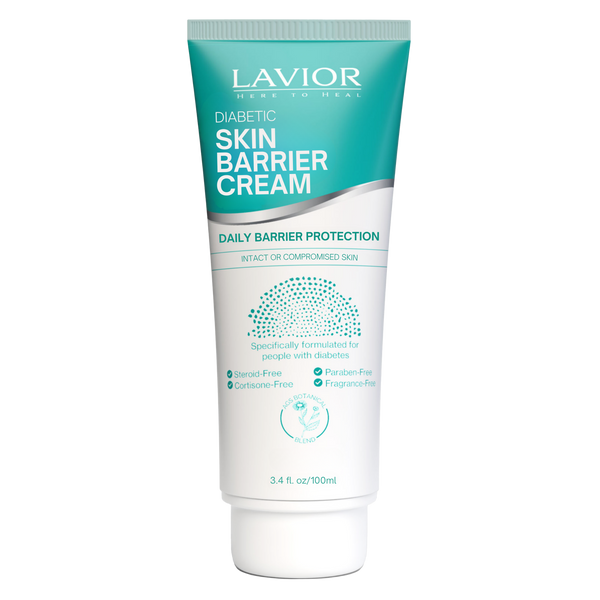
When your feet can't tell you about dryness or irritation, a consistent skin routine matters more. Lavior™ Diabetic Skin Barrier Cream is a fragrance-free, plant-based formula designed to support the skin's natural barrier and provide long-lasting hydration of dry, intact skin, without steroids. It is intended for intact skin, not open or bleeding fissures. Like every Lavior formula, it is built around Inula AGS-RIED, Lavior's proprietary extract of the Mediterranean plant Inula viscosa. It is fragrance-free and suitable for sensitive skin. Apply it to intact skin during your daily foot check, and report any changes in sensation to your healthcare provider.
Sources
- American Diabetes Association Professional Practice Committee. 12. Retinopathy, neuropathy, and foot care: Standards of Care in Diabetes—2025. Diabetes Care. 2025;48(Suppl 1):S252–S265. doi:10.2337/dc25-S012
- Schaper NC, et al. Practical guidelines on the prevention and management of diabetes-related foot disease (IWGDF 2023 update). Diabetes Metab Res Rev. 2024;40(3):e3657. doi:10.1002/dmrr.3657