If your feet stay dry no matter how much lotion you use, the cause is often how the skin is functioning underneath, not your routine. For people with diabetes, persistently dry feet are very common, and understanding why can help you choose a more effective daily approach.
Why do feet get dry and stay dry with diabetes?
Feet stay dry with diabetes mainly because reduced circulation and nerve changes lower the skin's own moisture and oil, while daily friction and the wrong products make it worse. The most common reasons:
- Reduced circulation. Blood flow to the feet can be lower than to other parts of the body, limiting the moisture and nutrients that reach the skin's surface.
- Nerve changes (neuropathy). Diabetes can affect the nerves that regulate sweat and oil production, and feet rely on that oil to stay soft.
- Friction and pressure. Shoes, standing and walking put daily stress on foot skin, which can add to dryness and cracking.
- Using the wrong products. Heavy, fragranced or alcohol-based lotions can sit on the surface without supporting the skin barrier, or can irritate already-sensitive skin. See what to look for in a lotion for diabetic skin.
Dryness elsewhere on the body follows the same pattern; our overview of diabetic dry skin (xerosis) covers it in more detail.
Why do dry feet matter beyond comfort?
Chronically dry feet are more likely to crack, especially around the heels, and cracked skin is a weaker barrier. That's why podiatrists and diabetes educators often recommend a daily foot and lower-leg skin routine rather than addressing dryness only once it becomes noticeable or painful. If cracks have already formed, read why cracked heels happen and how to care for them.
What is a good daily foot routine for diabetic skin?
A good routine takes a few minutes a day: wash gently, moisturize while skin is damp, skip the spaces between the toes, and look at your feet.
- Wash feet with lukewarm (not hot) water and pat dry; don't rub.
- Apply a fragrance-free, hypoallergenic barrier cream while skin is still slightly damp.
- Focus on the heels, sides of the feet and any rough or callused areas.
- Avoid applying cream between the toes, where excess moisture can be counterproductive.
- Check feet every day for cracks, redness or changes, and mention anything that doesn't improve to your provider.
How Lavior's Diabetic Skin Barrier Cream fits in
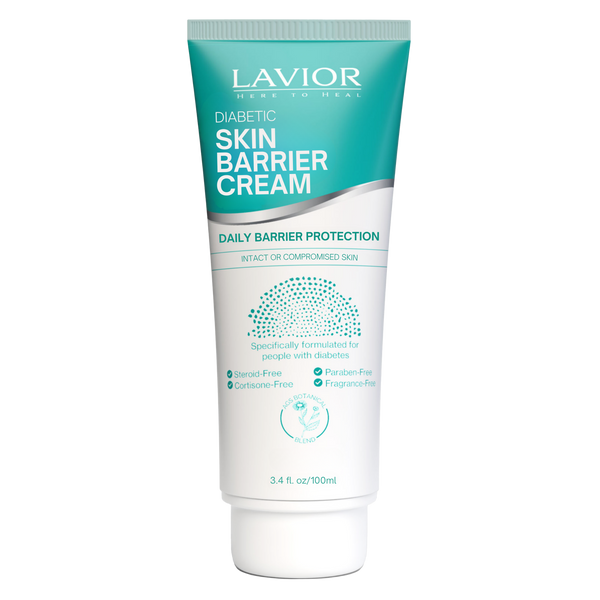
Lavior™ Diabetic Skin Barrier Cream is a fragrance-free, plant-based formula designed to support the skin's natural barrier and provide long-lasting hydration of dry, intact skin, without steroids. It is intended for intact skin, not open or bleeding fissures. Like every Lavior formula, it's built around Inula AGS-RIED, Lavior's proprietary extract of the Mediterranean plant Inula viscosa. It's fragrance-free, fast-absorbing and non-greasy, so it can be worked into a daily routine without leaving residue in socks or shoes, while helping support the skin's natural barrier and long-lasting hydration.
Sources
- Lima AL, et al. Cutaneous manifestations of diabetes mellitus: a review. Am J Clin Dermatol. 2017;18(4):541–553. doi:10.1007/s40257-017-0275-z
- American Diabetes Association Professional Practice Committee. 12. Retinopathy, neuropathy, and foot care: Standards of Care in Diabetes—2025. Diabetes Care. 2025;48(Suppl 1):S252–S265. doi:10.2337/dc25-S012
- Fluhr JW, et al. Restoring skin hydration and barrier function: mechanistic insights into basic emollients for xerosis cutis. Int J Dermatol. 2025;64(Suppl 1):5–12. doi:10.1111/ijd.17790