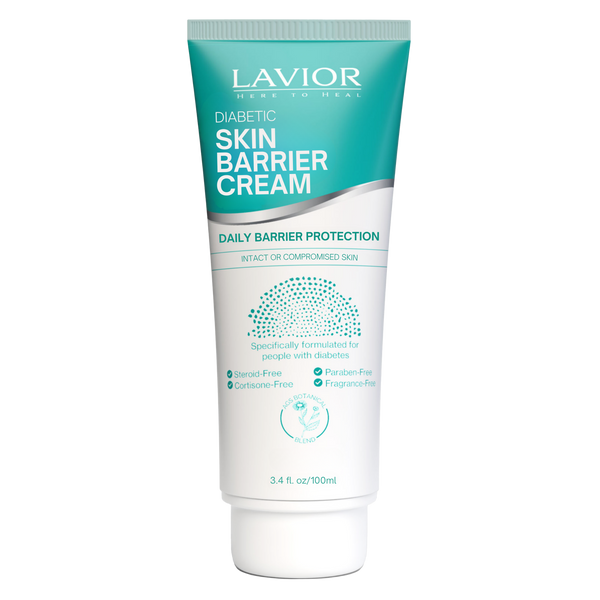
Promoting diabetic skin health in an urban podiatry clinic through a patient activation programme incorporating a botanically enhanced cream
Authors: Windy Cole, Nina Kovolyan, Jacob Wielgomas, Hetvi Patel, Hayley Carrasco, Jordan Boroditsky, Amy Sahlani, Veronica Palmer, and Sean Garcia
Publication: Journal of Lower Limb Wound Care Volume 1, Number 1
Abstract
Objective:
To evaluate the impact of a patient activation programme incorporating a botanically-enriched diabetic foot cream (BDFC) on skin health and self-care behaviours among individuals with diabetes in an urban clinical setting.
Method:
This institutional review board-approved, single-centre, prospective cohort pilot study enrolled 14 adult patients with types 1 and 2 diabetes and clinical evidence of xerosis. Participants received education on diabetic foot care and were instructed to perform daily foot evaluations followed by application of a botanical cream containing Inula viscosa extract. Skin health was assessed using six metrics—xerosis-associated pain, severity, roughness, depth, itching and interference with daily activities—before and after a two-week intervention. Statistical analysis included the Wilcoxon signed-rank test for non-parametric paired data.
Results:
Participants reported increased frequency of self-examinations and improvements in skin condition after two weeks of intervention. Statistically significant improvements were observed in severity of xerosis (p=0.0025), itching (p=0.0046), and interference with daily activities (p=0.0010). Descriptive statistics showed consistent improvement across all metrics. Additionally, 50% of participants reported moderate to significant improvement, and 64% expressed a high likelihood of future product use.
Conclusion:
The integration of a botanical foot cream into a patient activation programme demonstrated short-term improvements in diabetic foot skin health and promoted self-care behaviours. These findings suggest that such interventions may support efforts to prevent diabetic foot complications, particularly in underserved urban populations. Further research with larger, more diverse cohorts and longer follow-up is recommended.
Please contact info@lavior.com to receive the full study.
Link to Journal of Lower Limb Wound Care:
https://www.magonlinelibrary.com/doi/full/10.12968/llwc.2025.0001