A diabetic foot ulcer is an open sore or wound on the foot of a person with diabetes, usually where skin has broken down and exposed the tissue underneath. It most often forms on pressure points such as the ball of the foot, the heel or the tips of the toes, and it tends to heal slowly.
This guide explains what a diabetic foot ulcer is, what it looks like, and why it needs prompt attention. For the reasons diabetes makes ulcers more likely in the first place, see why diabetes causes foot ulcers.
What is a diabetic foot ulcer?
A diabetic foot ulcer is a break in the skin of the foot that does not close the way a normal cut or scrape would. It can range from a shallow, red crater in the top layer of skin to a deep wound that reaches tendon, muscle or bone.
Ulcers are not the same as everyday blisters or calluses, although those are often where an ulcer starts. The difference is that the skin has opened and the wound is not moving through the normal stages of healing.
What causes a diabetic foot ulcer?
Most diabetic foot ulcers come from a combination of factors rather than a single cause. The most common include:
- Nerve damage (neuropathy): reduced feeling in the feet means a pebble in a shoe, a blister or a small cut can go unnoticed for days.
- Reduced circulation: narrowed blood vessels, including peripheral artery disease (PAD), limit the oxygen and nutrients that reach the skin, which slows repair.
- Pressure and friction: foot deformities such as bunions or hammertoes, thick calluses and poorly fitting shoes concentrate pressure on small areas of skin.
- Blood sugar levels that stay high: over time, elevated glucose can affect the body's ability to repair tissue and respond to infection.
What does a diabetic foot ulcer look like?
Early on, an ulcer may look like a red, swollen or warm area, a blister that does not settle, or a callus with a dark spot or drainage underneath. As it develops, you may see an open sore with a defined edge.
Signs that need prompt medical attention include:
- Drainage or staining on your sock, especially if it is cloudy, yellow or green.
- An unusual or unpleasant odor from the area.
- Spreading redness, warmth or swelling around the wound.
- Black or dark tissue at or around the wound, which can indicate tissue death (necrosis).
- Fever, chills or feeling generally unwell.
Because neuropathy can dull pain, a serious ulcer may not hurt much. Do not rely on pain as a warning sign. Our guide to signs of infection in a diabetic wound covers when to call a doctor.
Why are diabetic foot ulcers serious?
A diabetic foot ulcer is serious because it can become infected and, if infection spreads, it can reach deeper tissue and bone. In severe cases, infection or loss of blood supply can lead to gangrene and amputation.
That is why early evaluation matters. Most of the worst outcomes start with a small wound that went unnoticed or untreated, which is explained in more detail in why diabetes-related amputations happen.
How is a diabetic foot ulcer usually managed?
Diabetic foot ulcers are managed by a healthcare team, often including a primary care provider, podiatrist and wound care specialist. Care plans commonly include:
- Assessment of the wound's size, depth, circulation and any signs of infection.
- Cleaning and debridement to remove dead or unhealthy tissue.
- Offloading to take pressure off the wound, for example with special footwear, a boot or a cast. See offloading devices explained.
- Dressings that keep the wound bed appropriately moist and protected.
- Infection management and attention to blood sugar, circulation and overall health.
For what you can do at home alongside that plan, read supporting diabetic foot ulcer care.
Can you lower the risk of a diabetic foot ulcer?
Yes. Daily foot checks, well-fitting shoes and socks, gentle skin care and regular foot exams with a podiatrist are generally considered the most effective everyday habits. Finding a problem when it is small gives you and your care team the most options.
How Lavior's Diabetic Wound Hydrogel fits in
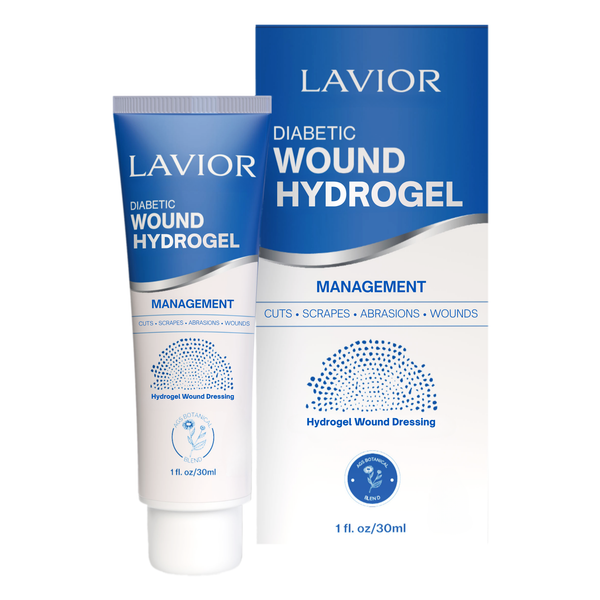
Lavior™ Diabetic Wound Hydrogel helps maintain a moist wound environment when used for the indications described on its label. Follow the product instructions and your healthcare professional's wound care plan. Like every Lavior formula, it is built around Inula AGS-RIED, Lavior's proprietary extract of the Mediterranean plant Inula viscosa. It is not a substitute for professional care: any foot ulcer in a person with diabetes should be evaluated by a healthcare provider, and a hydrogel should be used as part of the plan they recommend.