Wounds heal more slowly in older adults because aging reduces collagen production, cell turnover and immune response, and because medications, nutrition, stress and chronic illness often add to the delay. That is why doctors take even small wounds in older people seriously, whether or not they have diabetes.
Delayed healing raises the risk of infection and can allow minor lesions to progress into chronic wounds. Older adults are disproportionately affected by chronic wounds, which cause significant illness and death for millions of people in the United States and worldwide (1).
What is the toll of untreated wounds?
Untreated or unattended wounds can cause pain, loss of function, emotional distress and financial strain. Research has highlighted how much they affect a person's overall well-being and mental health (2).
Some wounds are highly visible, which can leave patients feeling self-conscious and lead them to withdraw from social situations, causing isolation and emotional stress. Managing a chronic wound can also place a significant financial burden on patients and their families.
Research published in Value in Health in 2018 reported that chronic non-healing wounds affect roughly 1% to 2% of people in developed nations, a prevalence similar to heart failure. While heart failure receives significant attention for its burden and costs, the comparable burden of chronic wounds, including amputation and even death, has largely gone under-recognized. The same analysis estimated Medicare spending on acute and chronic wounds at up to $96.8 billion a year (3).
What causes wounds and delayed healing in older adults?
Wounds have many causes, and in older adults healing is often slowed by a combination of age-related changes, medications and underlying health conditions.
Common causes of wounds include infections, burns and cuts, surgical procedures, pressure ulcers, medical conditions that affect skin integrity, penetrating injuries, chemical exposure, friction or pressure, radiation therapy and inflammatory skin conditions. For pressure injuries specifically, see how to care for a bed sore or pressure ulcer at home.
Aging slows tissue regeneration
With age, collagen formation and cell turnover decline, lowering the body's ability to regenerate tissue. Skin becomes thinner, and the inflammatory response is delayed, which affects immune cell function and the formation of new blood vessels (4).
Sex hormones play a role
Sex hormones contribute to age-related changes in wound healing. Older men have been found to heal acute wounds more slowly than older women, in part because estrogens, androgens and their precursor dehydroepiandrosterone (DHEA) strongly influence the healing process (5).
Psychological stress delays healing
Research in both humans and animals has shown that psychological stress can significantly slow wound healing. Depression, anxiety and hostility have been linked to slower healing, while good communication and healthy behaviors have been associated with better outcomes (6).
Some medications slow healing
Medications that affect clotting, platelet function, inflammation or cell growth can all influence healing (4).
- Systemic steroids can lead to incomplete granulation tissue and reduced wound contraction.
- NSAIDs have been reported in some studies to have a negative effect on healing.
- Many chemotherapy drugs target cell metabolism, rapid cell division and new blood vessel growth, all pathways needed for repair.
Never stop a prescribed medication on your own; if a wound is slow to heal, review your medications with your provider.
Obesity affects blood flow and healing
Obesity can hinder healing through poor blood flow, inflammation and nutrient shortfalls. When fatty tissue grows without a matching increase in blood supply, the tissue may receive too little oxygen, raising the risk of infection and slowing repair. Obesity is also associated with lower levels of adiponectin, a hormone that supports new blood vessel growth and skin cell migration during healing (7).
Malnutrition impairs normal healing
Malnutrition can interfere with each stage of wound healing. Shortfalls in protein, zinc and vitamins A, C and E can impair collagen synthesis and immune function. People who are malnourished are more prone to pressure ulcers, infections and delayed healing, which can lead to chronic non-healing wounds (8).
Chronic illness reduces blood flow to wounds
Conditions common in older adults, such as peripheral vascular disease and cardiovascular disease, can reduce blood flow and nutrient delivery to the wound site. Learn how to recognize the warning signs in what makes a wound chronic.
How are slow-healing wounds managed in older adults without diabetes?
Effective care takes a multimodal approach led by a healthcare provider. Key elements include:
- A thorough wound assessment to identify the cause and any barriers to healing.
- Infection prevention and prompt treatment of any infection.
- Treating underlying conditions, such as circulation problems, malnutrition or poorly controlled chronic illness.
- Pain management.
- Patient and caregiver education.
- Routine monitoring of the wound's progress.
- Appropriate wound care products and dressings chosen for the wound type.
For more on long-term care strategies, read our overview of chronic wound management.
How Lavior's Multipurpose Wound Gel fits in
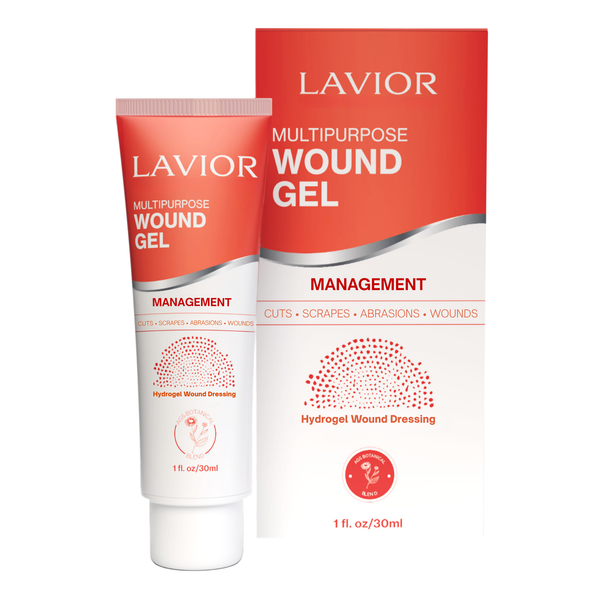
Lavior™ Multipurpose Wound Gel helps maintain a moist wound environment when used for the indications described on its label. Follow the product instructions and your healthcare professional's wound care plan. Like every Lavior formula, it is built around Inula AGS-RIED, Lavior's proprietary extract of the Mediterranean plant Inula viscosa.
References
- Cristina ML, Spagnolo AM, Giribone L, Demartini A, Sartini M. Epidemiology and prevention of healthcare-associated infections in geriatric patients: a narrative review. International Journal of Environmental Research and Public Health. 2021;18(10):5333.
- Klein TM, Andrees V, Kirsten N, Protz K, Augustin M, Blome C. Social participation of people with chronic wounds: a systematic review. International Wound Journal. 2021;18(3):287-311.
- Nussbaum SR, Carter MJ, Fife CE, DaVanzo J, Haught R, Nusgart M, et al. An economic evaluation of the impact, cost, and Medicare policy implications of chronic nonhealing wounds. Value in Health. 2018;21(1):27-32.
- Guo S, DiPietro LA. Factors affecting wound healing. Journal of Dental Research. 2010;89(3):219-29.
- Gilliver SC, Ashworth JJ, Ashcroft GS. The hormonal regulation of cutaneous wound healing. Clinics in Dermatology. 2007;25(1):56-62.
- House SL. Psychological distress and its impact on wound healing: an integrative review. Journal of Wound, Ostomy and Continence Nursing. 2015;42(1):38-41.
- Alma A, Marconi GD, Rossi E, Magnoni C, Paganelli A. Obesity and wound healing: focus on mesenchymal stem cells. Life. 2023;13(3):717.
- Ghaly P, Iliopoulos J, Ahmad M. The role of nutrition in wound healing: an overview. British Journal of Nursing. 2021;30(5):S38-S42.