Good daily skin care with diabetes comes down to eight habits: cleanse gently and moisturize, check your skin every day, trim nails carefully, protect against the sun, keep blood sugar in range, stay hydrated, get skin concerns checked, and wear protective footwear. These steps help keep skin intact so small problems are caught before they become harder to manage.
This article is the practical routine. For an overview of specific conditions, see common diabetic skin conditions.
Why does skin care matter more with diabetes?
Over time, high blood sugar affects the skin in several ways, so routine care does more work for people with diabetes than for most people.
- Dry skin: fluid lost through frequent urination and changes in sweat and oil glands can leave skin dry and flaky.
- Itching: dry skin itches, and scratching can cause irritation and raise the risk of infection.
- Slower healing: high blood sugar can slow the body's ability to heal, so even minor cuts and scrapes may take longer.
- Skin infections: diabetes can weaken immune defenses, making bacterial infections such as cellulitis and fungal infections more common.
- Nerve damage: neuropathy can reduce sensation in the hands and feet, so injuries may not be noticed promptly.
What are the best daily skin care tips for diabetes?
- Keep skin clean and moisturized. Wash with a mild, fragrance-free soap and pat dry gently. Apply a hypoallergenic moisturizer while skin is still slightly damp, paying extra attention to dry areas like elbows, lower legs and feet, but not between the toes. Not sure what to look for? See best lotion for diabetic skin.
- Inspect your skin every day. Look for changes, cuts, scrapes, blisters, cracks or signs of infection. Use a handheld mirror for hard-to-see areas such as the soles of your feet, and get anything concerning checked.
- Trim nails carefully. Cut nails straight across to avoid accidental cuts and ingrown toenails. If your nails are thick or you have trouble reaching your feet, a podiatrist can help.
- Protect your skin from the sun. Sunburn damages the skin barrier and adds to dryness. Use sunscreen and wear protective clothing when you spend time outdoors.
- Keep blood sugar in range. Good diabetes management is the foundation for healthy skin. Follow your provider's plan for diet, activity and medication.
- Stay hydrated. Drinking enough water through the day helps keep skin from drying out. Learn more in diabetes and dehydration.
- See a dermatologist when needed. If skin concerns are not improving or are getting worse, see a dermatologist, ideally one familiar with diabetic skin.
- Wear appropriate footwear. Well-fitting, comfortable shoes and clean socks help prevent blisters and pressure spots. Avoid walking barefoot, even at home. For guidance, see footwear mistakes that lead to ulcers.
When should you get a skin problem checked?
Get prompt care for any open sore, cut that is not improving, blister, crack, spreading redness, warmth or swelling, or a rash that does not settle. With diabetes, earlier is better.
How Lavior's Diabetic Skin Barrier Cream fits in
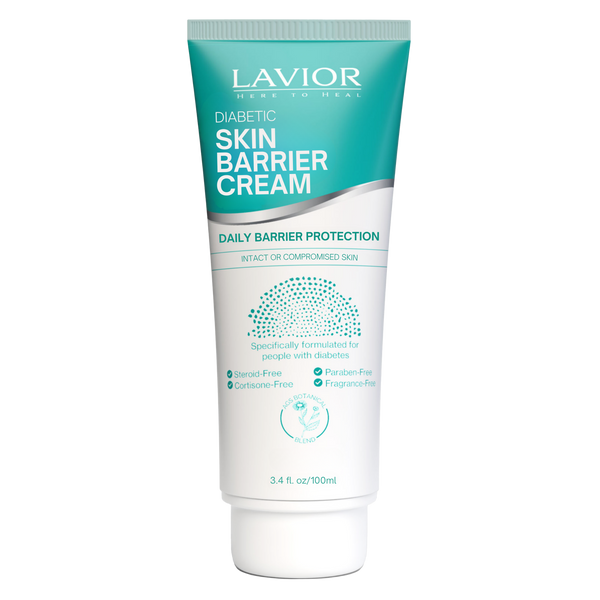
Lavior™ Diabetic Skin Barrier Cream is a fragrance-free, plant-based formula designed to support the skin's natural barrier and provide long-lasting hydration of dry, intact skin, without steroids. It is intended for intact skin, not open or bleeding fissures. Like every Lavior formula, it is built around Inula AGS-RIED, Lavior's proprietary extract of the Mediterranean plant Inula viscosa. Following these habits and keeping up with regular check-ups can help reduce the risk of skin-related complications.
Sources
- Lima AL, et al. Cutaneous manifestations of diabetes mellitus: a review. Am J Clin Dermatol. 2017;18(4):541–553. doi:10.1007/s40257-017-0275-z
- American Diabetes Association Professional Practice Committee. 12. Retinopathy, neuropathy, and foot care: Standards of Care in Diabetes—2025. Diabetes Care. 2025;48(Suppl 1):S252–S265. doi:10.2337/dc25-S012