The most effective way to deal with lumps and scar tissue at insulin pump sites is to rotate sites consistently and give overused areas a long rest. Gentle cleaning and moisturizing after each site change can support the skin, but no cream removes existing lumps, and hardened areas should be checked by your diabetes care team.
If you use an insulin pump or take regular injections, tissue buildup at insertion sites is a familiar frustration. It can make sites uncomfortable, make it harder to find good new spots and, most importantly, affect how well your insulin works.
Why do lumps form at insulin pump sites?
Repeatedly using the same area causes the tissue under the skin to change. The most common result is lipohypertrophy, a buildup of fatty tissue caused by insulin being delivered into the same spot again and again, often combined with firmer, fibrous scar tissue from repeated small injuries.
Each time a cannula or needle goes through the skin, it creates a tiny wound, and scar tissue forms as part of the body's natural repair process. When the same area is used over and over, the tissue may not recover between insertions, and soft tissue can become lumpy, rubbery or hard under the skin.
Can scar tissue affect insulin absorption?
Yes. Insulin delivered into lumpy or thickened tissue can be absorbed unpredictably, which may lead to unexpected highs and lows.
Research has found that lipohypertrophy is linked to more variable blood sugar. Many people notice their numbers improve when they stop using a lumpy area. If you have been using such a site, talk to your care team before moving to fresh tissue, since your insulin needs may change once absorption becomes more consistent.
How do I prevent lumps at insulin pump sites?
Site rotation is the single most important habit. Giving each area time to recover between uses is what keeps tissue soft and absorption consistent.
- Rotate every time. Move each new infusion set to a different spot, ideally following a set pattern across the abdomen, thighs, buttocks or arms, as approved for your pump.
- Space your sites. Place each new set a few centimeters away from the last one so the same small patch is not reused.
- Change sets on schedule. Most infusion sets are changed every 2 to 3 days. Follow your provider's and manufacturer's guidance.
- Rest lumpy areas. Avoid any spot that feels firm, rubbery or bumpy. Overused areas often soften over time when they are left alone.
- Check your sites. Look at and gently feel your usual areas regularly; lumps are often easier to feel than to see.
Our article on protecting your skin during insulin pod changes includes more rotation and placement tips.
How should I care for skin after removing an insulin pump site?
Remove the old set gently, clean the area, and support the skin while it recovers. These steps help the skin stay comfortable and intact; they do not remove existing lumps.
- Remove the set carefully. Peel the adhesive slowly, low and close to the skin.
- Clean the area. Wash away adhesive residue, oils and dirt with mild soap and water, then pat dry.
- Moisturize the intact skin. Apply a gentle, fragrance-free moisturizer to the old site and the skin around it once it is clean and dry.
- Cover if needed. If clothing rubs the spot, a non-stick bandage can protect it.
- Repeat daily for the first several days after a site change, and keep that area out of your rotation while it rests.
Never apply creams or gels to the spot where your next set will be inserted. The new site should be clean and dry. The same rule applies to continuous glucose monitors; see our guide to caring for CGM sensor sites.
Does this work for insulin injection sites too?
Yes. The same principles apply if you inject insulin with pens or syringes: rotate injection sites, use a new needle each time, avoid lumpy areas and keep the skin clean and moisturized between injections.
When should I talk to my care team?
Raise any lumps, hard areas or unexplained blood sugar swings with your diabetes care team. They can examine your sites, help you plan a rotation pattern and adjust your insulin if needed.
Seek care promptly if a site becomes red, swollen, warm, painful or starts to drain, since these can be signs of infection.
How Lavior's Diabetic Skin Barrier Cream fits in
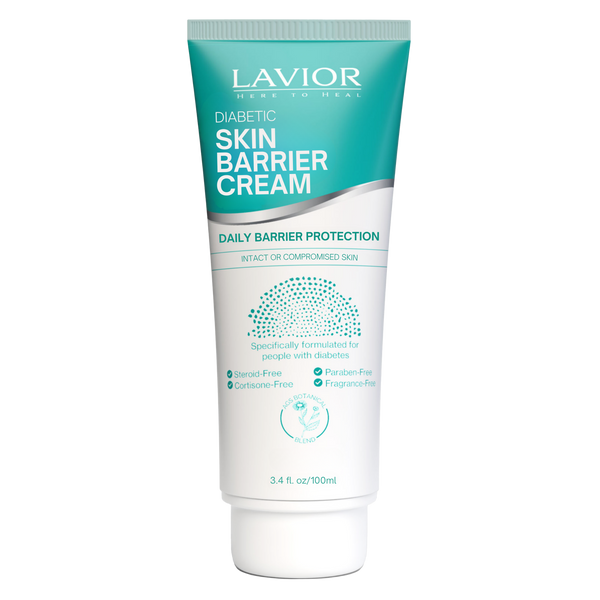
Lavior™ Diabetic Skin Barrier Cream is a fragrance-free, plant-based formula designed to support the skin's natural barrier and provide long-lasting hydration of dry, intact skin, without steroids. It is intended for intact skin, not open or bleeding fissures. Like every Lavior formula, it is built around Inula AGS-RIED, Lavior's proprietary extract of the Mediterranean plant Inula viscosa. It can be part of your daily care for old, intact pump and injection sites and the skin you rotate through. It is not intended to reduce scar tissue or lumps, and it should never be applied where your next set or sensor will go in.
Written by Ben Tzeel, with updates from the Lavior editorial team.