Microcirculation, the blood flow through your smallest blood vessels, delivers the oxygen and nutrients a wound needs to repair itself, so when it is reduced, as it often is with diabetes, wounds tend to heal more slowly. Supporting healthy circulation is one of the most practical things you can do for slow-healing skin.
This article explains what microcirculation is, how diabetes disrupts it, the warning signs to watch for, and daily habits that help.
What is microcirculation?
Microcirculation is the movement of blood through the body's smallest vessels: capillaries, arterioles and venules. Capillaries are so narrow that red blood cells pass through them in single file.
These tiny vessels do three jobs that healing depends on:
- Delivering oxygen: cells need oxygen to build new tissue and to fight bacteria.
- Supplying nutrients and fluid: a steady supply fuels collagen production and tissue repair.
- Removing waste: healthy flow clears metabolic waste products. When flow is poor, they linger, adding to swelling and inflammation.
When microcirculation is weak, wounds struggle to move through the normal healing stages.
How does diabetes affect blood flow to the skin?
Over time, high blood sugar can damage both small blood vessels and nerves, especially in the legs and feet. This leads to several problems that work together:
- Damaged, narrowed vessels: less blood reaches the skin, so oxygen and nutrients arrive more slowly.
- Changes in the blood: persistently high glucose may affect how easily blood flows through small vessels.
- Loss of sensation: neuropathy means small injuries often go unnoticed. See Why Early Sensory Loss in the Feet Goes Unnoticed.
- Ongoing inflammation: poorly supplied tissue can get stuck in an inflammatory state instead of moving on to repair.
Together, these explain why a small cut on a diabetic foot can become serious quickly, and why prevention matters so much. For more on the blood sugar side, read How Blood Sugar Levels Affect Wound Healing Speed.
What are the warning signs of poor circulation?
Reduced blood flow to the feet and legs often shows up as:
- Cold feet or toes
- Tingling, numbness or burning sensations
- Slow hair or nail growth on the legs and feet
- Pale, shiny or thin skin
- Swelling in the legs or ankles
- Wounds that take longer than two to three weeks to heal
- Cramping pain in the calves when walking that eases with rest
Some of these signs can also point to peripheral artery disease (PAD), which affects larger arteries and needs medical assessment. If you notice them, mention them to your healthcare provider.
How can you support healthy microcirculation?
Always follow your provider's advice, but these everyday habits generally support blood flow:
Move often
You do not need intense exercise. Short bouts of activity every hour, such as heel raises, ankle circles, a short walk or gentle stretching, help keep blood moving in the legs. If you have neuropathy, see The Impact of Exercise on Peripheral Neuropathy for safe options.
Be careful with heat
Warmth relaxes blood vessels, but people with diabetes are usually advised not to soak their feet, and hot water can burn skin you cannot feel. If you have reduced sensation, ask your provider before using any heat on your feet.
Stay hydrated and eat well
Good hydration helps blood flow, and a balanced diet with enough protein, fruit, vegetables and healthy fats supports blood vessels and skin repair.
Avoid tobacco and limit alcohol
Nicotine narrows blood vessels, and heavy drinking can worsen inflammation and nerve damage. Both work against healthy circulation.
Protect your skin from small injuries
Because poor circulation slows repair, preventing damage matters even more:
- Moisturize daily with a product suited to diabetic skin, but not between the toes.
- Wear well-fitting shoes and seamless, moisture-wicking socks. See Footwear Mistakes That Lead to Ulcers.
- Check your feet every day and care for minor cuts and scrapes promptly.
What helps at the wound itself?
Topical products cannot fix circulation, but they can support the local wound environment while your body does the repair work. Keeping a wound clean, covered and moist rather than dry is widely considered favorable, and any wound that is slow to improve should be reviewed by a provider.
How Lavior's Diabetic Wound Hydrogel fits in
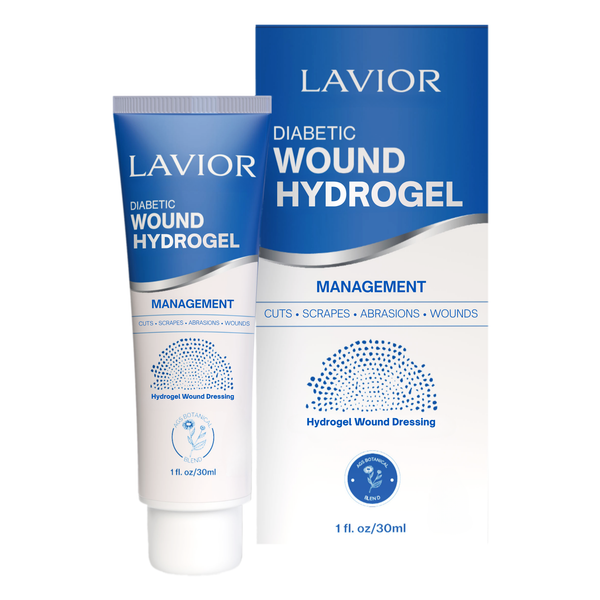
Lavior™ Diabetic Wound Hydrogel helps maintain a moist wound environment when used for the indications described on its label. Follow the product instructions and your healthcare professional's wound care plan. Like every Lavior formula, it is built around Inula AGS-RIED, Lavior's proprietary extract of the Mediterranean plant Inula viscosa.
Sources
- Guo S, DiPietro LA. Factors affecting wound healing. J Dent Res. 2010;89(3):219–229. doi:10.1177/0022034509359125
- American Diabetes Association Professional Practice Committee. 12. Retinopathy, neuropathy, and foot care: Standards of Care in Diabetes—2025. Diabetes Care. 2025;48(Suppl 1):S252–S265. doi:10.2337/dc25-S012