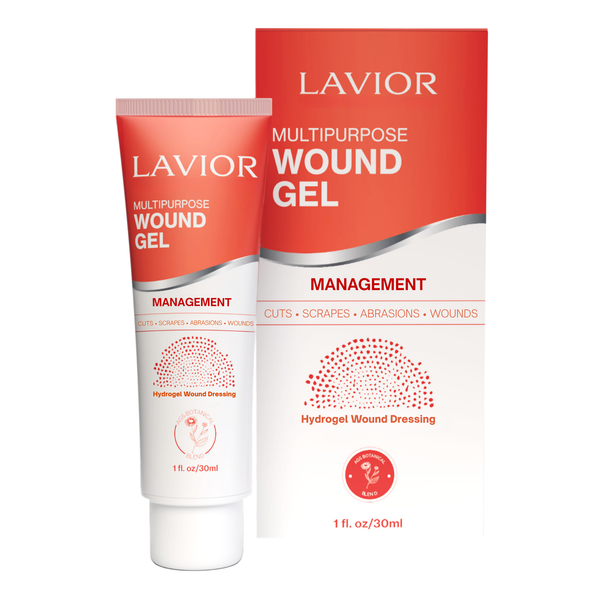
A wound hydrogel works by releasing water into the wound bed, keeping the surface moist so the body's own repair processes are not slowed by a dry scab. Because it is mostly water held in a gel, it also feels cooling and lifts away at dressing changes without tearing new tissue.
What is a hydrogel, physically?
A hydrogel is a network of water-loving polymer chains that traps a large amount of water in a soft, jelly-like structure.
The polymer network keeps the water from simply running off, so the gel stays where it is applied and releases moisture slowly. If you want the basics first, including the different forms hydrogels come in, see what a hydrogel dressing is and when it is used.
How does a hydrogel keep a wound moist?
It donates water to the wound surface rather than absorbing fluid from it.
On a dry or lightly draining wound, that extra moisture stops the surface from drying into a hard scab. A hydrated wound bed is widely considered a better environment for repair, because the cells that rebuild skin need moisture to move across the wound. The process is explained in more depth in the science behind moist wound healing.
How does a hydrogel help with dead tissue?
Hydrogels support autolytic debridement, the body's natural way of breaking down dead tissue.
Wounds sometimes carry a layer of yellowish slough or dry, dark tissue. In a moist environment, the body's own enzymes can soften and loosen it so it lifts away gradually. This is gentle and painless, but slow, and wounds with significant dead tissue should be managed by a clinician who can decide whether faster methods are needed.
Why does a hydrogel feel cooling?
Some of the gel's water evaporates from its surface, which draws heat away from the skin.
That cooling feel is one reason hydrogels are popular for minor burns and sunburn after the area has been cooled under running water. See how to treat a minor burn at home for the full first-aid steps.
Why doesn't a hydrogel stick to the wound?
The gel stays soft and wet between the wound and the bandage, so new tissue does not bond to the dressing.
Dry gauze on a dry wound can stick as fluid hardens into it, and pulling it off can disturb the wound and hurt. With a gel layer underneath, the bandage usually lifts away cleanly.
What do the other ingredients in a wound gel do?
Beyond water and the gel-forming polymer, many wound gels add ingredients for comfort or skin feel. Common examples include:
- Glycerin: a humectant that helps hold moisture in the gel and skin.
- Aloe vera (aloe barbadensis leaf juice): widely used in skin care for its soothing feel.
- Allantoin: a skin protectant and conditioning ingredient.
- Botanical extracts such as Inula viscosa, a Mediterranean plant used in Lavior's formulas. Read more in what is Inula viscosa.
Ingredients vary by product, so check the label if you have sensitive skin or allergies.
What are the limits of a hydrogel?
Hydrogels add moisture but absorb very little, so they are not suited to wounds that are already draining heavily.
- Heavy drainage: extra moisture can make the surrounding skin soft and white. An absorbent dressing is usually better. See what to do when a wound won't stop draining.
- A secondary dressing is needed: amorphous gel must be covered to stay in place and not dry out.
- It is not a substitute for medical care: deep, infected, or non-healing wounds need a provider's assessment.
How Lavior's Multipurpose Wound Gel fits in
Lavior Multipurpose Wound Gel is an amorphous hydrogel with aloe vera and Inula AGS-RIED (Lavior's proprietary extract of Inula viscosa). Lavior™ Multipurpose Wound Gel helps maintain a moist wound environment when used for the indications described on its label. Follow the product instructions and your healthcare professional's wound care plan. It is fragrance-free and suitable for sensitive skin. Apply a thin layer once or twice daily under a non-stick bandage, or as directed by your healthcare provider.