Cracked heels are one of the most common skin complaints people search for, and while they're usually harmless for most people, they deserve closer attention if you have diabetes. Understanding why heels crack in the first place makes it much easier to treat them consistently instead of just covering them up.
Why Heels Crack
The skin on the heels is thicker than most other areas of the body and carries a lot of daily pressure. When that skin loses moisture, it becomes stiff and less flexible. Add in standing, walking, and pressure from footwear, and dry heel skin eventually splits at its weakest points, forming visible cracks (also called heel fissures).
Common contributing factors include:
- Prolonged standing or walking, especially in open-back shoes
- Cold, dry weather
- Hot showers and harsh soaps that strip natural oils
- Being overweight, which adds pressure to the heel pad
- Diabetes, which can reduce circulation and natural oil production in the feet
Why Diabetic Heels Need Extra Attention
For people with diabetes, cracked heels aren't just a cosmetic issue. Reduced circulation and nerve sensitivity mean a crack can go unnoticed and take longer to improve, and any break in the skin barrier is a potential entry point for irritation. That's why a consistent, dedicated foot care routine matters more for diabetic skin than it does for the general population.
How to Treat Cracked Heels
- Soak briefly in lukewarm water to soften the skin, then pat dry gently.
- Apply a barrier-supporting cream to clean, slightly damp skin, focusing on the heel and surrounding rough areas.
- Avoid picking or cutting at cracked skin, which can make things worse.
- Wear closed-back, supportive shoes when possible to reduce pressure and friction.
- Be consistent. Daily application, not occasional heavy use, is what actually improves stubborn dryness over time.
How Lavior's Diabetic Skin Barrier Cream Fits In
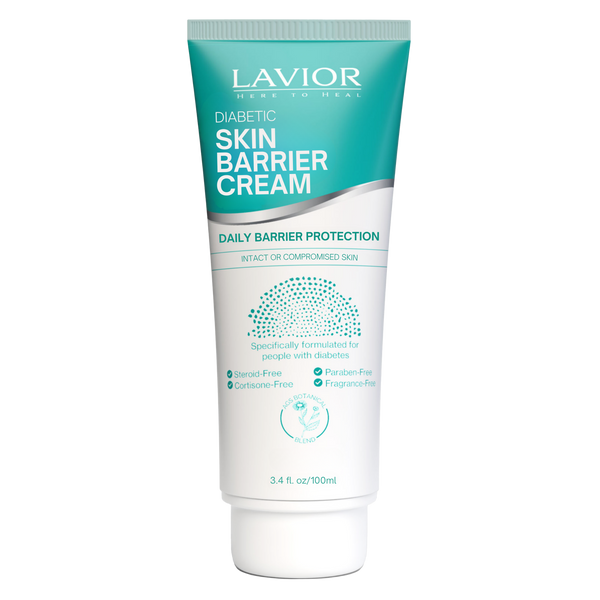
Lavior's Diabetic Skin Barrier Cream is a fragrance-free, hypoallergenic, plant-based formula designed to support the skin's natural barrier and provide long-lasting hydration, without steroids or harsh ingredients. It's fast-absorbing and non-greasy, making it easy to apply to the heels and feet as part of a daily routine, and it's been clinically evaluated in individuals with diabetes and dry skin.