Five facts about diabetic wounds that surprise many people: foot ulcers and pressure sores are the most common type, they often heal slowly because of reduced blood flow, many are painless because of nerve damage, they carry a higher risk of infection, and if neglected they can lead to gangrene and amputation. Knowing these helps explain why small wounds deserve fast attention when you have diabetes.
Diabetes affects the feet in particular, where people often deal with bunions, nail problems and poor blood flow. Here is what to know.
1. Foot ulcers and pressure sores are the most common diabetic wounds
Foot ulcers and pressure sores are among the most common wounds in people with diabetes. Ulcers often form on the ball of the foot, the heel or the tips of the toes, where pressure and friction are highest. That's why daily foot checks and early attention to skin or nail changes are so often recommended.
2. Diabetic wounds often heal more slowly
Even a small blister can become a problem. Narrowed blood vessels mean less blood flow and oxygen reach the wound, and high blood sugar reduces the effectiveness of the white blood cells that fight infection. Together, these slow every stage of healing. Read more in why diabetic wounds heal slowly.
3. Many diabetic wounds don't hurt
Diabetic neuropathy, nerve damage linked to high blood glucose, reduces feeling, most often in the feet. People may not feel a developing blister, a cut or even an infection, so a problem can progress much further and faster than they expect before it is found.
4. Infection risk is higher
Diabetes weakens the body's defenses against infection, so even small wounds carry a higher risk. High glucose stops immune cells from working as effectively, and infections can spread quickly. That is why any wound that looks red, swollen, warm or is draining should be seen by a healthcare professional promptly. See signs of infection in a diabetic wound.
5. Untreated wounds can lead to gangrene and amputation
Because infection risk is higher, so is the risk of gangrene, bone infection (osteomyelitis) and sepsis. Diabetes is the leading cause of non-traumatic lower-limb amputation in the United States, and most of these amputations begin with a foot ulcer. Something as simple as a shoe rubbing the wrong way can start the process within days. If a wound isn't improving, see what to do when a diabetic wound stalls.
How can you lower your risk?
Proactive habits make a real difference:
- Eat nourishing foods that help keep blood glucose steady and provide vitamins such as vitamin C.
- Check your body daily for open wounds and signs of infection, especially if you have neuropathy. Ask for help if your eyesight is poor.
- Keep pressure off any wound.
- Get regular aerobic exercise to support circulation and cardiovascular health.
- Don't smoke.
- Don't ignore leg pain when walking. It can be a sign of a blocked artery and is worth mentioning to your provider.
- Have your nails cut properly, by a podiatrist if they are thick or hard to manage.
- Never go barefoot, indoors or out, and shake out your shoes before putting them on.
Our daily checklist to avoid diabetic wounds puts all of this into a routine.
How Lavior's Diabetic Wound Hydrogel fits in
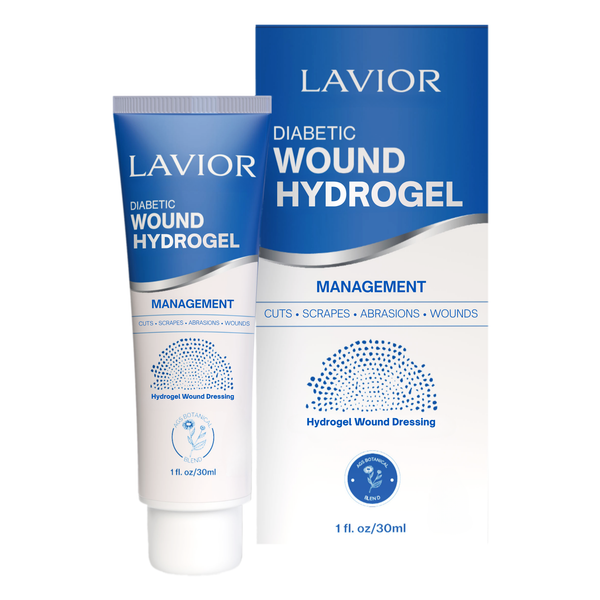
Lavior™ Diabetic Wound Hydrogel helps maintain a moist wound environment when used for the indications described on its label. Follow the product instructions and your healthcare professional's wound care plan. Like every Lavior formula, it is built around Inula AGS-RIED, Lavior's proprietary extract of the Mediterranean plant Inula viscosa. It complements, but doesn't replace, prompt care from a trained professional.
Sources
- Armstrong DG, Boulton AJM, Bus SA. Diabetic foot ulcers and their recurrence. N Engl J Med. 2017;376(24):2367–2375. doi:10.1056/NEJMra1615439
- American Diabetes Association Professional Practice Committee. 12. Retinopathy, neuropathy, and foot care: Standards of Care in Diabetes—2025. Diabetes Care. 2025;48(Suppl 1):S252–S265. doi:10.2337/dc25-S012